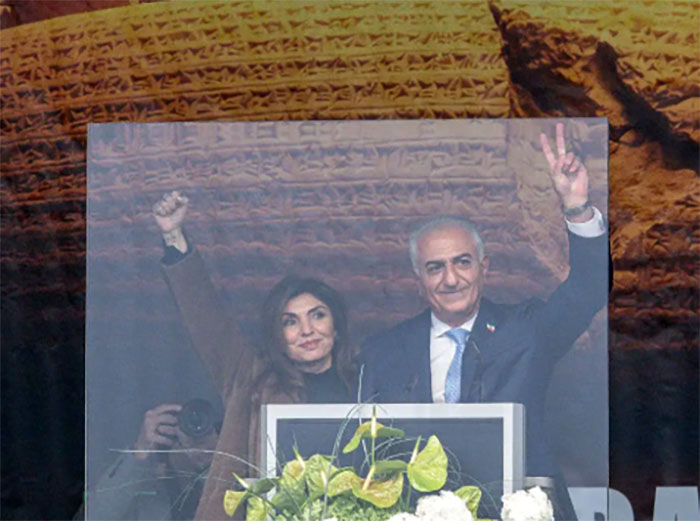
Reza Pahlavi Receives 2026 Freedom Prize in Frankfurt as Thousands of Demonstrate in Germany
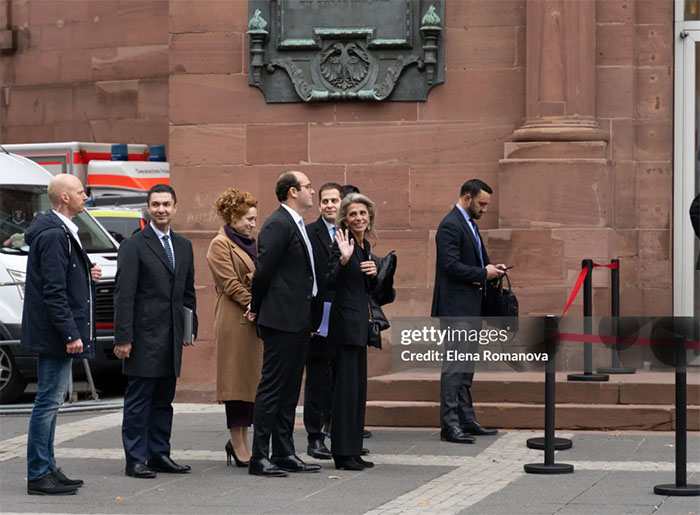
The decision to hold the Freedom Prize ceremony at St. Paul’s Church was particularly symbolic.
The Paulskirche occupies a prominent position in German democratic history because it hosted the Frankfurt Parliament of 1848.
The assembly was an important milestone in the development of German parliamentary democracy. Delegates from across the German states gathered to discuss political representation, constitutional government and national unification.
Although the parliamentary experiment ultimately failed to establish a lasting democratic state at that time, its historical significance continued to influence Germany’s democratic development.
By presenting the 2026 Freedom Prize in this location, the Friedrich Naumann Foundation connected the Iranian people’s aspirations with a place associated with constitutional debate and democratic political participation.
The symbolism was especially relevant because the award recognised the efforts of people seeking civil rights and political freedoms.
For the Iranian diaspora, the Paulskirche ceremony provided an opportunity to connect the contemporary political situation in Iran with the broader international history of democratic movements.
The location also helped explain why the event attracted attention from German politicians, international journalists and civil society organisations.
Why Did the Friedrich Naumann Foundation Choose the Iranian People?
The decision to award the 2026 Freedom Prize to an entire nation rather than a single political leader was one of the most significant aspects of the ceremony.
The Friedrich Naumann Foundation explained that the award recognised the courage of people in Iran who were fighting for freedom, civil rights and democracy.
By selecting the Iranian people as the recipients, the foundation sought to emphasise that the struggle for political freedoms extends beyond individual opposition figures or political organisations.
Reza Pahlavi’s role was therefore defined as representative rather than personal ownership of the award.
This distinction is important in understanding the political meaning of the ceremony.
The award was not presented as an endorsement of a particular future government or a definitive decision about whether Iran should become a monarchy or a republic.
Instead, the foundation’s stated objective was to recognise the aspirations of the Iranian population and the efforts of those working towards a free and democratic society.
The arrangement also established a symbolic connection between the award and the principle of popular sovereignty: the ultimate political authority in a democratic Iran should belong to its people.
November 7, 2026 | 3:11 pm