Asghar Farhadi’s “Parallel Tales” Arrives at Cannes: A Red Carpet Defined by Cinema, Elegance, and Global Anticipation
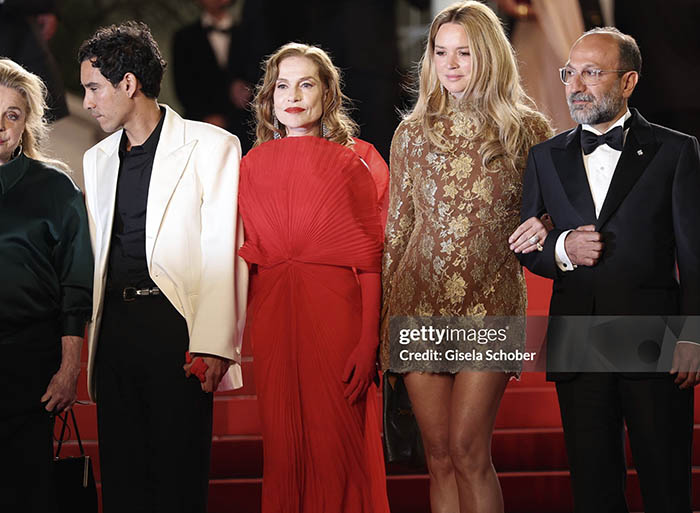
Asghar Farhadi: The Master of Moral Complexity
Few contemporary directors command respect across global cinema circles with the consistency of Asghar Farhadi.
Over the course of his career, Farhadi has established himself as one of the defining storytellers of modern dramatic filmmaking. His cinema is distinguished not by spectacle or visual excess, but by precision. He constructs emotional tension through conversations, misunderstandings, hidden motivations, social pressure, and moral uncertainty.
His characters rarely exist as heroes or villains.
Instead, Farhadi presents individuals trapped within circumstances where every decision carries emotional consequences. Audiences are invited to sympathize with multiple perspectives simultaneously, creating narratives that resist simplistic interpretation.
This complexity has become his artistic signature.
International recognition for Farhadi expanded dramatically after films such as “A Separation” and “The Salesman” achieved global acclaim. Critics praised his ability to explore intimate human relationships while simultaneously addressing broader social realities.
What makes Farhadi particularly remarkable is his control of dramatic escalation.
His films often begin with ordinary situations: a disagreement between family members, a missing object, a misunderstanding, or a private secret. Gradually, these situations intensify into emotionally devastating conflicts that reveal the fragility of trust and identity.
Audiences experience his narratives almost like investigations.
Each new revelation changes how previous scenes are interpreted.
By the time credits roll, viewers frequently discover that their understanding of the characters has shifted multiple times.
Farhadi’s filmmaking style also emphasizes realism.
His camera work often feels observational rather than manipulative. Performances unfold with natural rhythms. Dialogue carries the unpredictability of real conversation. Emotional moments emerge organically instead of through melodramatic orchestration.
This realism has allowed Farhadi’s films to resonate across cultures.
Although many of his stories originate within specific social environments, the emotional dilemmas at their center remain universally recognizable. Themes of guilt, responsibility, pride, loyalty, love, and personal survival transcend geography.
That universality partly explains why his Cannes return generated such attention.
Festival audiences understand that a Farhadi premiere rarely offers passive entertainment. His films demand engagement. They provoke discussion immediately after screenings and continue generating debate long afterward.
“Parallel Tales” therefore arrived at Cannes carrying not only excitement, but intellectual curiosity.
Observers wondered how Farhadi’s narrative approach would interact with French actors and European cultural settings. Would the film maintain the tightly wound interpersonal tension associated with his earlier work? Would it explore new stylistic territory? Would it deepen his already formidable reputation?
The red carpet premiere represented the beginning of those conversations.
May 14, 2026 | 6:34 pm