10 Fascinating Stories About Most Famous Actresses: Behind-the-Scenes Secrets From Iconic Films and TV Shows
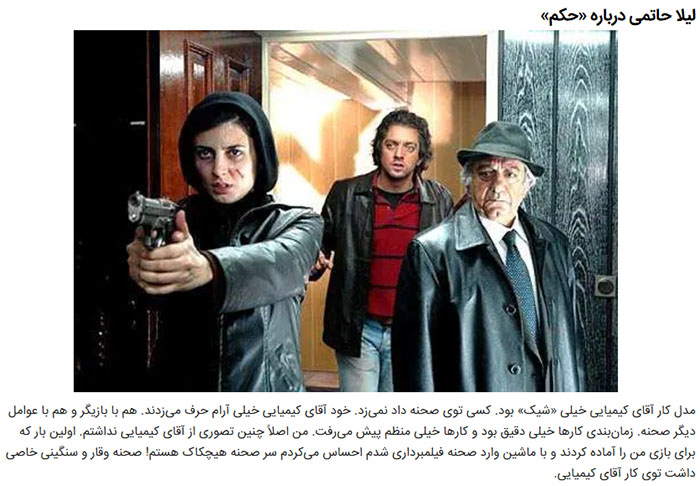
4. Leila Hatami on Hokm: The Unexpected Elegance of Masoud Kimiai’s Film Set
Film: Hokm
Director: Masoud Kimiai
A film director’s reputation often precedes them. Actors may hear stories about a director’s temperament, working methods, or expectations long before they arrive on set.
Sometimes, the reality is completely different from what they imagined.
Leila Hatami’s recollection of working with Masoud Kimiai on Hokm provides an interesting example of how a director’s personal style can shape the atmosphere of a production.
Hatami is one of the best-known actresses in Iranian cinema, with a career that includes acclaimed dramatic performances and international recognition. Kimiai, meanwhile, is a prominent filmmaker whose work has played an important role in the development of modern Iranian cinema.
Their collaboration offered Hatami an opportunity to experience the director’s working environment firsthand.
A Director Who Never Needed to Shout
Hatami described Kimiai’s manner as refined and unusually calm.
According to her account, nobody shouted on set. Kimiai himself spoke softly, both to the actors and to the crew.
The production schedule was precise, and the work proceeded in an organized fashion.
Hatami said she had not expected this atmosphere from Kimiai. Her impression of the production was one of dignity, composure, and professional discipline.
The anecdote challenges a familiar stereotype about film directors: the idea that an intense artistic vision must be accompanied by a loud or intimidating personality.
In reality, effective directing can take many forms. Some directors communicate through forceful instructions; others rely on quiet authority, careful preparation, and the confidence that comes from knowing exactly what they want.
The Hitchcock Comparison
Hatami recalled that when she first arrived for a scene after being prepared for filming, the atmosphere made her feel as though she were on the set of an Alfred Hitchcock film.
The comparison conveys a sense of cinematic seriousness and deliberate organization.
Hitchcock was famous for his meticulous preparation, storyboarding, and control over the visual structure of his films. Although the comparison does not mean Kimiai worked in exactly the same way, it captures Hatami’s impression of entering a carefully managed cinematic environment.
For an actor, a well-organized set can make a significant difference.
When schedules are clear and the crew understands the plan, performers can focus on their characters rather than worrying about avoidable disruptions.
Preparation also allows the director to communicate the emotional and visual objectives of a scene more effectively.
Why a Calm Set Can Improve Performance
Filmmaking is a collaborative process involving actors, cinematographers, lighting technicians, sound operators, production designers, assistants, and many other professionals.
A tense environment can make communication difficult, particularly when a scene requires emotional vulnerability or precise physical movement.
A calm atmosphere does not eliminate pressure, but it can help the crew manage it more constructively.
Hatami’s experience suggests that Kimiai’s approach combined clear expectations with respectful communication.
Such an environment can also encourage actors to ask questions, experiment with a performance, and respond to direction without feeling that every decision is a confrontation.
The result is not necessarily a better film in every case, but the working conditions can support the creative process.
Masoud Kimiai and Iranian Film History
Masoud Kimiai is associated with a generation of filmmakers whose work helped establish distinctive forms of Iranian popular and dramatic cinema.
His films have often explored loyalty, social hierarchy, personal codes of honor, and individuals confronting difficult moral choices.
These themes are expressed through recognizable characters, stylized dialogue, and carefully constructed dramatic situations.
Hokm belongs to the body of work through which Kimiai continued to explore relationships and social structures in contemporary Iran.
Hatami’s recollection adds a personal dimension to this history by showing how the director’s working methods were experienced by an actor.
What Leila Hatami’s Anecdote Teaches Us About Filmmaking
The story demonstrates that a director’s influence extends beyond the finished images on screen.
A film’s atmosphere is created through decisions made throughout production, including how the director speaks to people, how schedules are organized, and how creative disagreements are handled.
The quiet discipline Hatami described appears to have left a strong impression because it differed from her expectations.
For readers interested in Iranian cinema, the anecdote offers a useful reminder that filmmaking is not only about dramatic storytelling. It is also about creating the conditions in which dozens of people can work together effectively.
October 16, 2026 | 6:53 pm