10 Fascinating Stories About Most Famous Actresses: Behind-the-Scenes Secrets From Iconic Films and TV Shows
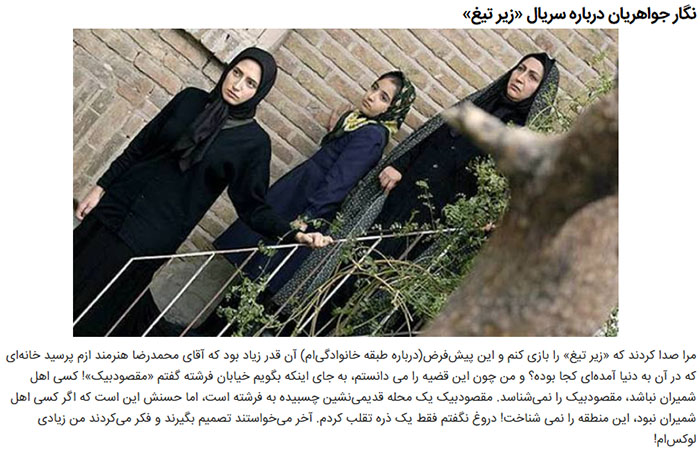
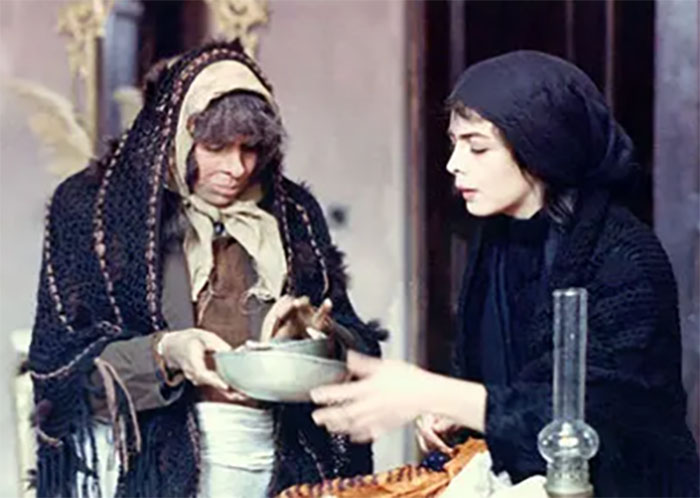
10. Negar Javaherian and Zir-e Tigh: The Clever Answer That Helped Her Avoid a Stereotype
Television series: Zir-e Tigh
Director: Mohammad Reza Honarmand
Casting decisions are rarely based on acting ability alone.
Directors may consider a performer’s appearance, voice, mannerisms, background, previous roles, and perceived suitability for a character.
Sometimes these judgments help a production identify the right performer. At other times, they can create stereotypes that an actor must navigate.
Negar Javaherian’s recollection of her casting experience for Zir-e Tigh provides an amusing example of how an actress can respond intelligently when she believes that assumptions about her background are influencing a decision.
The Question About Her Childhood Home
Javaherian recalled being invited to work on Zir-e Tigh, a television series directed by Mohammad Reza Honarmand.
During the process, Honarmand asked where she had been born or where her childhood home had been located.
Javaherian understood that the question was not necessarily just about geography.
She believed that the director was trying to assess whether her background matched the social identity of the character under consideration.
In the account, her perceived upper-class or affluent image had become a point of discussion.
She therefore decided to answer in a way that would change the impression she created.
Fereshteh Street Versus Maghsoud-Beik
Rather than naming Fereshteh Street, an area associated in her account with a particular social image, Javaherian answered “Maghsoud-beik.”
She explained that Maghsoud-beik is an old neighborhood near Fereshteh in the Shemiran area of northern Tehran.
Someone unfamiliar with the local geography might not immediately recognize the name or understand how close the two places are.
Javaherian later described her response as a small act of cheating rather than a complete lie.
She had given a real place name, but selected one that would be less likely to trigger the assumptions she believed were influencing the casting decision.
The cleverness of the anecdote lies in her understanding that the interviewer might interpret a place name as a signal of social background.
How Neighborhoods Become Social Labels
Cities are more than collections of streets and buildings.
Neighborhoods often carry reputations connected with income, family history, architecture, lifestyle, education, and access to particular opportunities.
These reputations can influence how people perceive one another, even when the assumptions are incomplete or inaccurate.
In casting, a director may be looking for an actor who appears to belong to a particular social environment.
That process can be useful when it helps establish the credibility of a character, but it can also become restrictive if an actor is judged primarily through stereotypes.
An individual’s place of origin does not determine their personality, artistic abilities, or suitability for every role.
Javaherian’s story highlights the gap between a person’s actual experience and the assumptions that others may make based on a single detail.
Why the Answer Was Clever
Javaherian did not respond by arguing about the director’s assumptions.
Instead, she used her knowledge of Tehran’s geography to provide an answer that was technically accurate but likely to produce a different impression.
The strategy was subtle.
Rather than confronting the perceived stereotype directly, she changed the information through which the interviewer might evaluate her.
The anecdote reveals a form of social awareness: understanding not only what a question asks, but why the other person may be asking it.
This ability can be useful in many professional situations, especially when people are being evaluated according to expectations that have not been stated openly.
What the Story Reveals About Acting and Casting
An actor must often persuade a director that they can embody a character who differs from their own background or public image.
The process involves demonstrating flexibility, emotional range, physical suitability, and an understanding of the role.
However, casting can also be influenced by first impressions.
An actress who appears too sophisticated, too young, too polished, or too familiar with a particular social environment may be judged unsuitable before the director has fully considered her performance.
Javaherian’s anecdote suggests that she recognized this possibility and adapted her answer accordingly.
It does not establish every detail of the director’s decision-making process, but it offers a memorable perspective on how actors interpret casting conversations.
Negar Javaherian’s Career
Negar Javaherian has become a recognized figure in Iranian cinema and television through a range of performances.
Her work illustrates the importance of versatility in an industry where actors may need to move between different genres, social environments, and character types.
The anecdote from Zir-e Tigh adds another dimension to her public image. It portrays an actress who pays close attention to the assumptions behind a question and knows how to respond strategically.