10 Fascinating Stories About Most Famous Actresses: Behind-the-Scenes Secrets From Iconic Films and TV Shows
3. Bita Farahi and Hamoun: The Emotional Scene That Continued Beyond the Script
Film: Hamoun
Director: Dariush Mehrjui
Co-star: Khosrow Shakibai
Among the most fascinating aspects of acting is the unpredictable relationship between a scripted scene and an actor’s emotional response.
A performer may prepare carefully for a scene, understand the character’s motivations, and rehearse the dialogue repeatedly. Yet, once the cameras begin rolling, the experience can produce emotions that are more intense than expected.
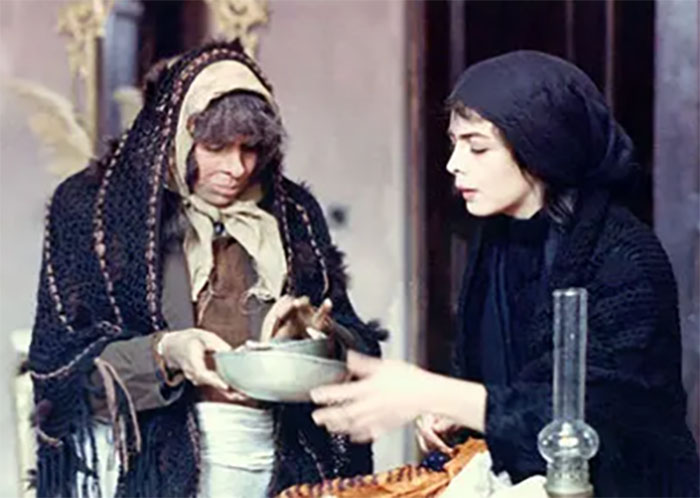
Bita Farahi’s recollections of working on Hamoun, the acclaimed film directed by Dariush Mehrjui, illustrate this phenomenon.
The film, released in 1990, became one of the important works in modern Iranian cinema. Its complex portrayal of a troubled marriage, intellectual anxiety, and emotional conflict has helped it remain a subject of discussion among Iranian film enthusiasts.
Farahi played Mahshid, a character whose relationship with Hamoun forms the emotional center of the story. Hamoun was played by Khosrow Shakibai, whose performance is widely remembered for its intensity.
The Rooftop Scene
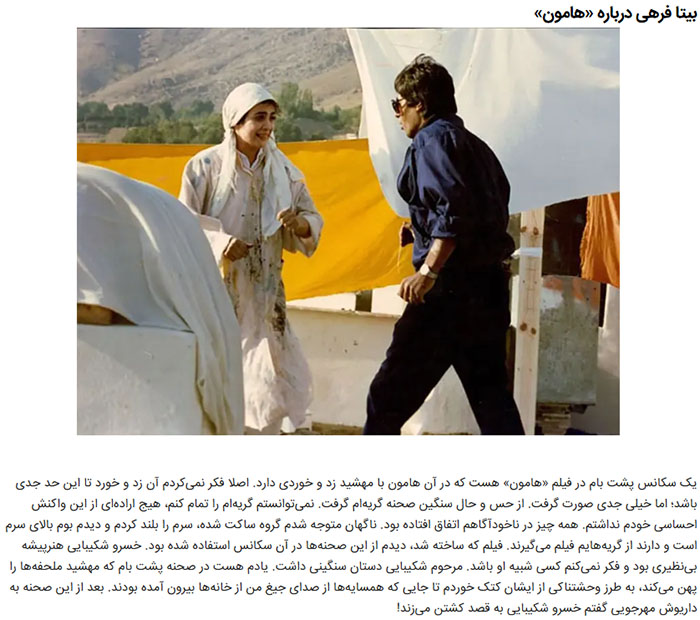
Farahi recalled a rooftop scene in which Hamoun and Mahshid become involved in a physical confrontation.
The scene was more intense than she had anticipated. As the confrontation unfolded, the emotional atmosphere affected her so strongly that she began to cry.
What made the experience particularly striking was that she did not feel able to stop the tears.
According to her account, the response emerged spontaneously rather than through a deliberate attempt to produce a particular acting technique.
At one point, she noticed that the film crew had become unusually quiet. When she looked up, she saw that a boom microphone was positioned above her and realized that the crew was recording the moment.
The emotional reaction had become part of the filmed scene.
When Farahi later watched the completed film, she discovered that the footage of her crying had been retained in the final sequence.
When an Unexpected Emotion Becomes Part of a Film
Film productions often seek performances that appear spontaneous, but genuine spontaneity is difficult to manufacture.
Directors may rehearse a scene extensively, adjust camera positions, refine the dialogue, and discuss the characters’ motivations. Yet the most powerful moment may occur when an actor responds to the situation in an unexpected way.
Farahi’s story illustrates how such a moment can become valuable footage.
The important distinction is that an emotional reaction does not automatically improve a scene. It becomes meaningful when it fits the character and the story.
In Hamoun, emotional instability is central to the relationship between the two main characters. A spontaneous expression of distress can therefore reinforce the tension already present in the narrative.
The final editorial decision determines whether the footage contributes to the film’s emotional structure.
Bita Farahi’s Memories of Khosrow Shakibai
Farahi also spoke about the physical intensity of the rooftop confrontation.
She remembered Shakibai as an extraordinary actor but joked that he had a very heavy hand.
In her recollection, the scene in which Mahshid hangs bedsheets on the rooftop became so physically intense that her screams reportedly caused nearby residents to come outside.
Afterward, she told Mehrjui that Shakibai hit as though he were trying to kill her.
The remark captures both the intensity of the scene and the humor that can emerge when actors reflect on difficult moments after filming has ended.
However, such a recollection should not be taken as evidence that every physical action was unplanned or that real injury was the intended outcome. Screen violence depends on choreography, performance, camera positioning, editing, and the conditions under which the scene is filmed.
A physically demanding scene can be memorable precisely because it creates the impression of uncontrolled conflict while remaining part of a carefully constructed production.
Why Hamoun Remains Important
Hamoun is frequently discussed as a significant work in Iranian cinema because of its portrayal of personal crisis and its unusual combination of psychological drama, social observation, and intellectual references.
The character of Hamoun embodies a person struggling to reconcile ideas, expectations, and emotional reality. Mahshid is not merely a supporting figure in his story; her relationship with him helps reveal the instability of the world they share.
Farahi’s recollections provide insight into the emotional demands of playing such a character.
Her anecdote also highlights the importance of collaboration between actors and directors. A performance does not exist in isolation. It is shaped by the other performer, the physical environment, the crew, and the director’s decisions during filming.
The Legacy of Bita Farahi and Khosrow Shakibai
Bita Farahi became known for performances that could communicate emotional complexity without relying exclusively on dialogue.
Khosrow Shakibai, meanwhile, remains one of the most recognizable actors in Iranian cinema, particularly for his expressive delivery and ability to portray troubled, intense characters.
Their work in Hamoun demonstrates why certain films remain culturally important long after their original release.
Audiences continue to revisit the performances, while interviews and behind-the-scenes stories offer additional perspectives on how the films were made.
October 16, 2026 | 6:53 pm