10 Fascinating Stories About Most Famous Actresses: Behind-the-Scenes Secrets From Iconic Films and TV Shows
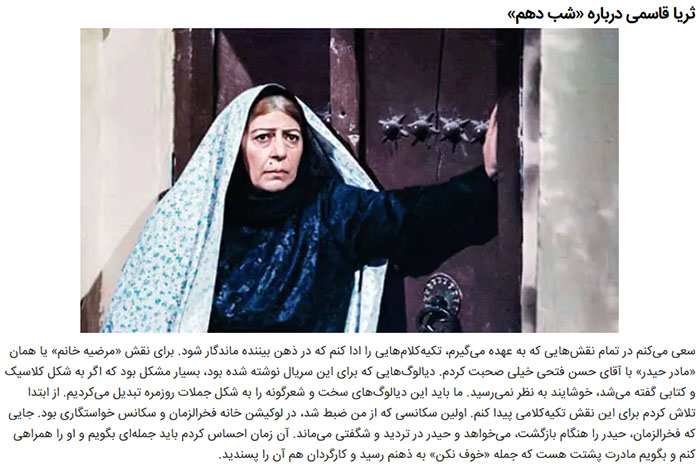
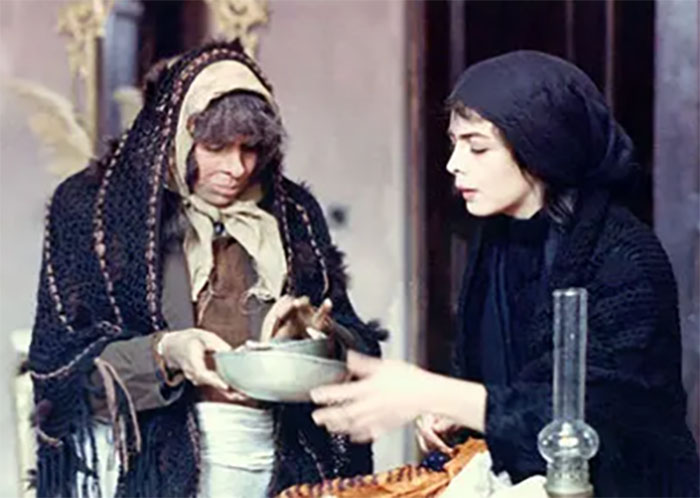
2. Soraya Ghasemi and Shab-e Dahom: How “Don’t Be Afraid” Became a Memorable Line
Television series: Shab-e Dahom (The Tenth Night)
Director: Hassan Fathi
Some television characters become unforgettable because of their costumes or dramatic storylines. Others are remembered because of a single sentence that captures their personality.
Soraya Ghasemi, one of Iran’s distinguished actresses, has spoken about the importance of creating memorable expressions for the characters she portrays.
For her, a successful character is not simply someone who delivers the dialogue written in a screenplay. The character should have a recognizable voice, a particular way of speaking, and expressions that viewers can associate with that individual.
Her work as Marzieh Khanom, the mother of Heidar in the television series Shab-e Dahom, provides a particularly interesting example of this approach.
Turning Literary Dialogue Into Everyday Speech
The series, directed by Hassan Fathi, required the actors to work with dialogue that Ghasemi described as complex.
Literary language can be beautiful on the page, but spoken dialogue has different demands. A sentence that looks elegant in a script may sound unnatural when delivered during a family argument, an intimate conversation, or a tense emotional scene.
The challenge was to preserve the poetic quality of the writing while making the characters sound like people speaking to one another.
Ghasemi recalled extensive discussions with Fathi about the dialogue. The aim was to transform complicated lines into natural, conversational Persian without losing their expressive power.
This process illustrates the relationship between screenwriting and acting. A script provides the structure, but actors must translate its language into speech, rhythm, gesture, and emotion.
The result is most effective when the audience hears a character rather than an actor reciting carefully written sentences.
The Scene That Inspired “Khouf Nakon”
Ghasemi also wanted Marzieh Khanom to have a recognizable expression.
The opportunity emerged during an early scene set at Fakhr-ol-Zaman’s house. The scene involved a marriage proposal and Heidar’s return, when his mother calls to him and he appears uncertain about what is happening.
Ghasemi felt that the character needed to say something reassuring. Marzieh Khanom was a mother, and the scene offered an opportunity to communicate her support for her son.
The phrase that came to her mind was “khouf nakon,” meaning “don’t be afraid.”
According to her recollection, she proposed the expression and Fathi liked it.
The phrase was simple, direct, and emotionally appropriate. It suggested that Marzieh Khanom understood her son’s uncertainty and wanted him to know that he was not facing the situation alone.
A short sentence could therefore communicate several aspects of the character at once: her maternal instinct, her emotional confidence, and her desire to protect her son.
Why Catchphrases Make Television Characters Memorable
Television audiences often spend several hours with a character across multiple episodes. Repeated expressions can help establish a familiar rhythm and make the character easier to recognize.
A successful catchphrase is not necessarily clever or complicated. It works because it emerges naturally from the character’s personality and the circumstances of the story.
In Marzieh Khanom’s case, “don’t be afraid” carries a meaning that extends beyond the immediate scene. It is a reassuring expression that can be understood in different emotional contexts.
For viewers, such lines can become associated with a particular character long after the series has ended.
They may also enter everyday conversation, especially when a television drama has a large audience.
The Creative Partnership Between Actor and Director
The anecdote also demonstrates how television dialogue can develop through collaboration.
The director establishes the overall vision, but an experienced actor may recognize opportunities to improve a character’s language or emotional expression.
When both are willing to discuss the details, a small adjustment can make the scene feel more natural.
This does not mean that actors should disregard the screenplay. Rather, it shows how performance and writing can reinforce each other.
Ghasemi’s approach reflects an understanding that every character needs a distinctive identity. The way someone speaks can be as revealing as what they say.
October 16, 2026 | 6:53 pm