Women Without Hijab: The Propaganda Paradox of Daily Life in Tehran During War
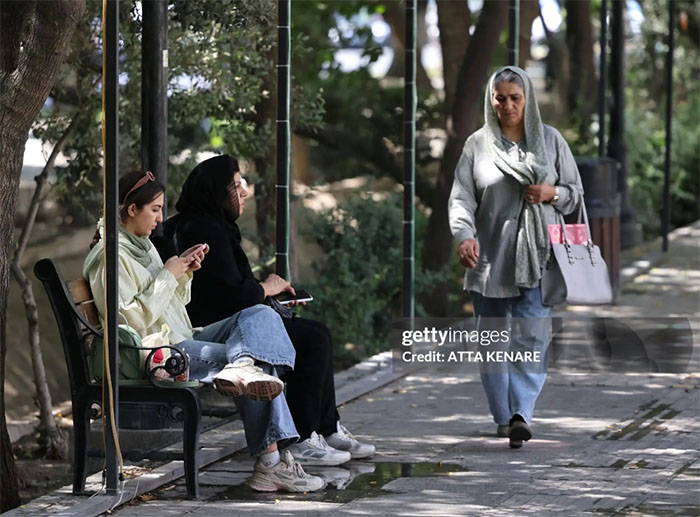
Hijab and the Question of State Authority
The controversy surrounding mandatory hijab in Iran is fundamentally connected to the relationship between individual behavior and state authority.
Iran’s Islamic Republic established compulsory hijab regulations following the 1979 Islamic Revolution.
Over subsequent decades, enforcement mechanisms evolved.
The morality police became internationally known as a symbol of state enforcement of dress regulations.
Yet Iranian society itself changed.
Generational attitudes toward clothing, relationships, music, technology and social interaction evolved.
The growth of social media accelerated these changes.
Iranian women could increasingly see how other women dressed in different countries.
They could share photographs.
They could communicate privately.
They could organize publicly.
Digital technology therefore weakened the state’s ability to completely control visual culture.
Social Media and the New Iranian Public Sphere
Instagram, Telegram and other digital platforms transformed how Iranian society communicates.
A woman walking without hijab in Tehran could be photographed and appear online within minutes.
The local act could become an international image.
This changes the political environment.
Before social media, the state had much greater control over which images reached national and international audiences.
Today, thousands of ordinary citizens can document their own experiences.
This does not mean every online image is authentic or representative.
Images can be selectively presented.
Videos can be edited.
Accounts can exaggerate.
Political groups can manipulate content.
Foreign media can select photographs that fit particular narratives.
Government media can do the same.
Therefore, digital visibility creates both greater transparency and new forms of propaganda.
September 14, 2026 | 6:05 pm