Sima Bina Receives the 16th Bita Prize from Stanford University
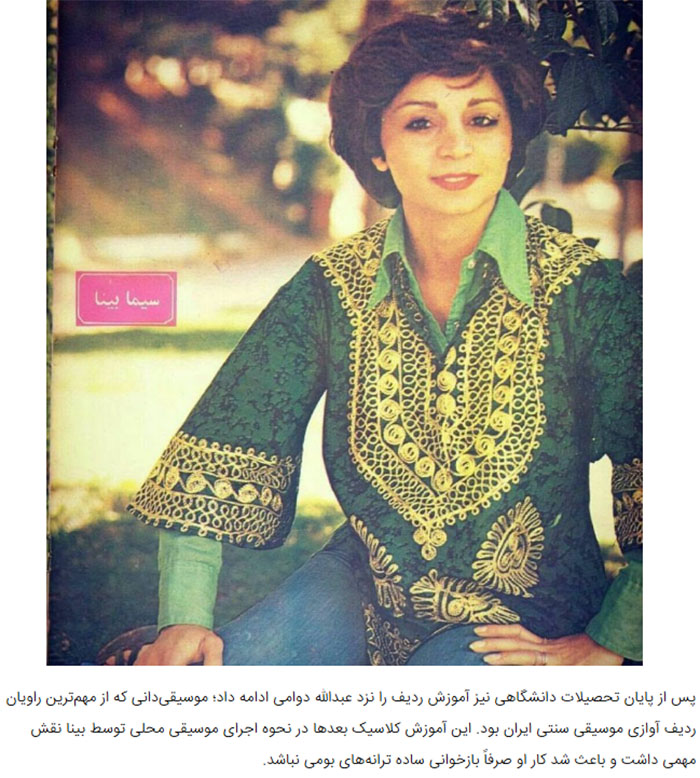
Each region can possess its own musical language.
That makes the preservation of Iranian folk music an enormous task.
Sima Bina’s work has been important precisely because she approached music as a cultural landscape rather than a single homogeneous tradition.
Sima Bina’s Research Into Regional Iranian Music
One of the most important parts of Bina’s career has been her research into regional music.
Rather than limiting her work to major cities, she traveled to areas where musical traditions were maintained by local singers and musicians.
Field research of this kind requires a very different approach from conventional studio recording.
A researcher must listen.
Observe.
Ask questions.
Learn pronunciation.
Understand cultural context.
Build trust with local communities.
And recognize that the same song can exist in multiple versions.
This approach is especially valuable for oral traditions because written musical archives may not adequately capture the way songs are actually performed.
The Importance of Oral Tradition
Many folk songs are transmitted orally.
Parents teach children.
Older singers teach younger singers.
Communities preserve songs through ceremonies and daily life.
This creates a living archive.
But it also creates vulnerability.
If a generation of singers disappears without passing on its repertoire, songs can disappear with them.
Recording and documenting those traditions can therefore function as a form of cultural preservation.
This is one reason Sima Bina’s research has significance beyond her own recordings.
Her work contributes to the preservation of a broader cultural memory.
November 9, 2026 | 6:01 pm