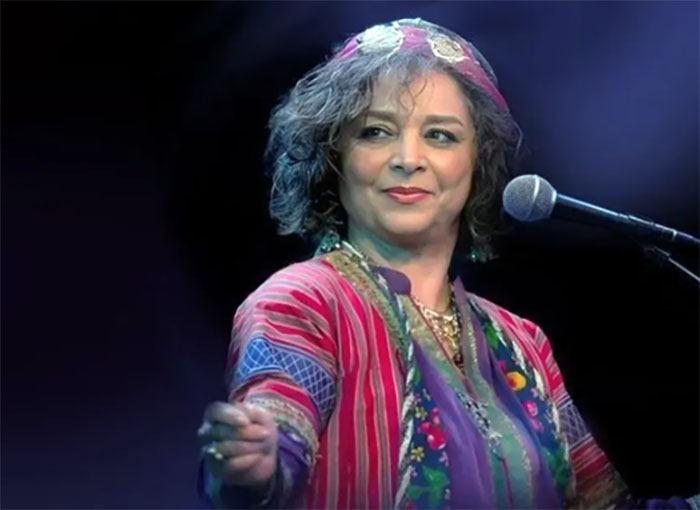
Sima Bina Receives the 16th Bita Prize from Stanford University
Rather than allowing political and institutional restrictions to end her musical work, Bina redirected her energy toward preservation and education.
Sima Bina as a Teacher
Teaching became an important part of Bina’s post-revolution career.
She worked with women interested in learning traditional singing and helped transmit musical knowledge in circumstances where female public performance was heavily restricted.
Education allowed musical traditions to continue through another channel.
A concert reaches an audience.
A teacher can influence generations.
This is why Bina’s role as an educator is essential to understanding her long-term cultural impact.
Her students did not merely receive vocal training.
They could also encounter traditional melodies, regional pronunciation, musical interpretation, and cultural history.
Sima Bina and Women in Iranian Music
Bina’s career is also significant within the history of Iranian women’s participation in music.
Her early success demonstrated that women could occupy prominent positions within Iranian musical culture.
After the Revolution, restrictions on female solo performance dramatically changed the possibilities available to women singers.
Bina’s response was not withdrawal.
She continued to teach and research while developing an international career.
Stanford specifically emphasizes the challenges faced by Bina and other women in maintaining musical traditions under restrictions on women’s voices.
Her career consequently became part of a larger story about cultural continuity, artistic resilience, and women’s participation in Iranian cultural life.
November 9, 2026 | 6:01 pm