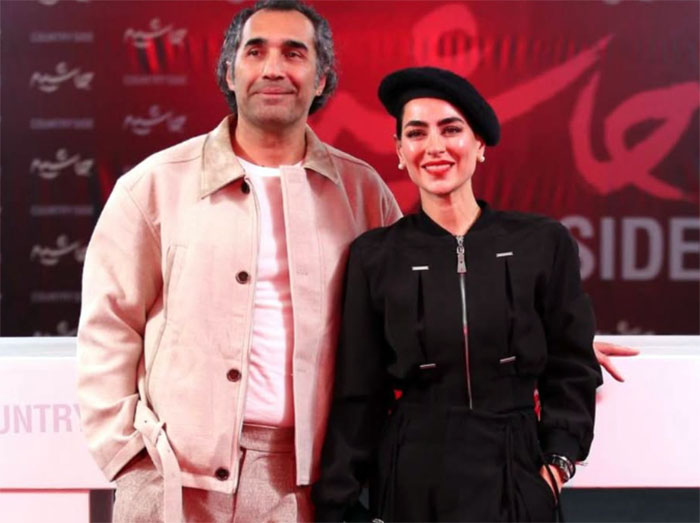
Sima Bina Receives the 16th Bita Prize from Stanford University
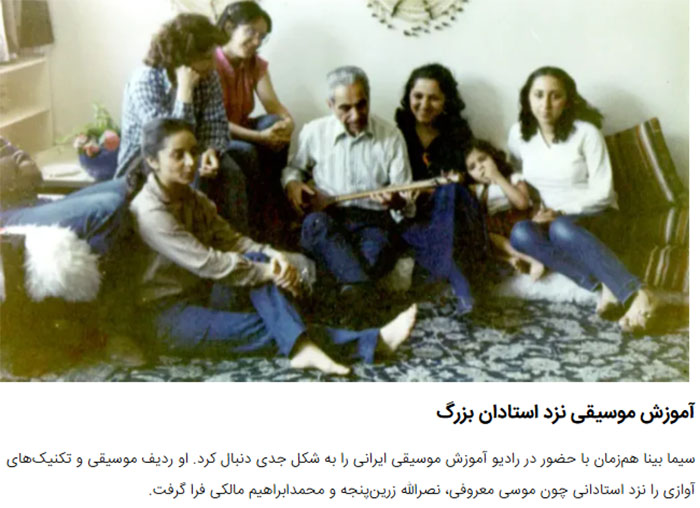
Sima Bina’s career developed around this broader concept of preservation.
Her work helped audiences outside Khorasan encounter musical traditions that might otherwise have remained geographically limited.
Sima Bina’s Musical Training
Although Bina became famous for regional and folk music, her artistic foundation also included training in traditional Persian music.
She studied the radif, the central repertorial framework of Persian classical music, with respected Iranian musicians.
This training gave her a technical foundation for interpreting melodies.
It also allowed her to approach folk music from the perspective of a trained musician rather than treating regional songs merely as historical artifacts.
The relationship between classical Persian music and Iranian folk music is complex.
They are not identical traditions.
However, musicians trained in the Persian classical system can bring a sophisticated understanding of modal structures, ornamentation, phrasing, rhythm, and vocal technique to regional material.
Bina’s artistic work developed within this intersection.
Sima Bina as a Painter
Music was not Sima Bina’s only artistic field.
She also studied painting at the University of Tehran.
Her background in visual art provides another important dimension to understanding her career.
The combination of music and painting allowed Bina to approach artistic expression through both sound and visual language.
This interdisciplinary identity also influenced elements of her performances.
Traditional Iranian clothing, regional visual culture, stage presentation, and artistic design became part of the broader cultural experience surrounding her music.
Her life therefore cannot easily be reduced to the label “singer.”
She was simultaneously a performer, researcher, teacher, visual artist, and cultural interpreter.
November 9, 2026 | 6:01 pm