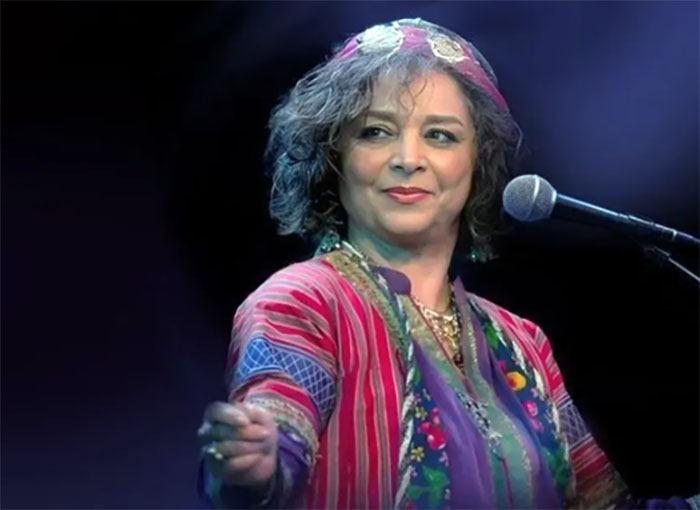
Sima Bina Receives the 16th Bita Prize from Stanford University
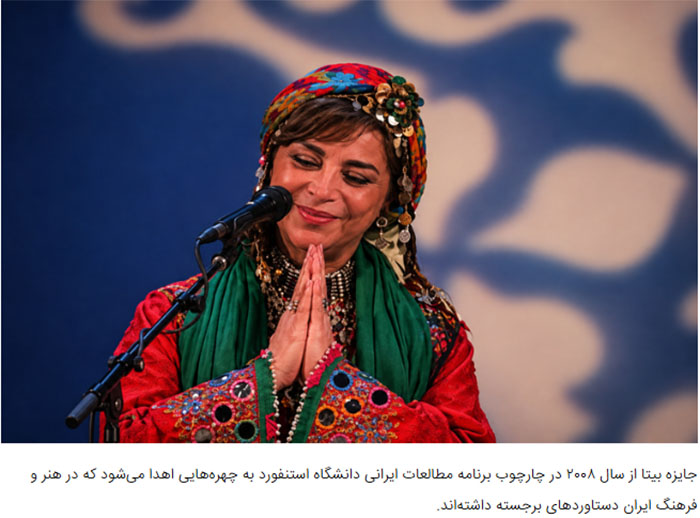
Sima Bina’s Place Among Iranian Cultural Figures
The Bita Prize has been associated with major Iranian cultural personalities across different disciplines.
The recognition of Sima Bina places her within a broader history of Iranian artistic achievement.
Her particular contribution is distinctive.
She represents the world of regional music.
She represents oral traditions.
She represents women’s participation in music.
She represents cultural research.
And she represents the international presentation of Iranian folk heritage.
Why Sima Bina’s Story Is Bigger Than One Award
Awards are temporary.
Cultural contributions can last much longer.
The significance of Bina’s career is therefore not limited to November 2026.
Her recordings remain.
Her students remain.
Her research remains.
Her melodies remain.
Her influence remains.
The Bita Prize simply provides a moment in which this long history becomes visible to a wider audience.
Conclusion: Sima Bina’s Enduring Musical Legacy
Sima Bina’s life and career represent one of the most distinctive journeys in modern Iranian music.
She began singing as a child.
She became part of the historic Iranian radio tradition.
She developed deep knowledge of Persian music.
She became associated with the regional music of Khorasan.
She researched songs and musical traditions in different parts of Iran.
She taught generations of students.
She continued her artistic career internationally.
And she devoted much of her life to ensuring that Iranian folk music would not disappear.
The 16th Bita Prize for Persian Arts, presented at Stanford University in November 2026, recognizes that extraordinary journey.
It recognizes Sima Bina not merely as a singer, but as a cultural figure whose work connects music, memory, research, education, language, regional identity, and Iranian heritage.
Her story demonstrates the extraordinary power of music to travel.
A melody can begin in a village.
A child can learn it from a family member.
A singer can record it.
A researcher can document it.
An audience can discover it.
A student can learn it.
And decades later, that same musical tradition can be celebrated on an international university stage.
That is the deeper significance of Sima Bina’s career.
Her achievement is not simply that she performed Iranian music.
It is that she helped ensure that Iranian musical traditions continued to be heard.
And in an era of rapid technological, social, and cultural change, that may be one of the most important contributions an artist can make.