10 Fascinating Stories About Most Famous Actresses: Behind-the-Scenes Secrets From Iconic Films and TV Shows
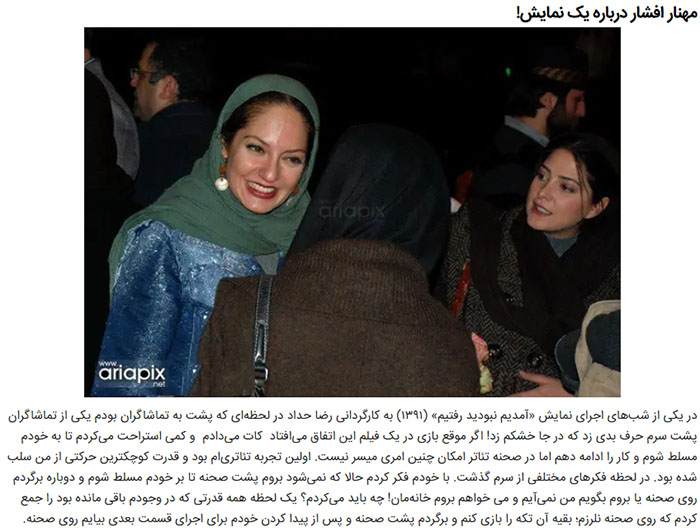
7. Mahnaz Afshar and Live Theater: The Moment an Audience Member Interrupted the Performance
Theater production: Amadim, Naboodid, Raftim (We Came, You Weren’t There, We Left)
Director: Reza Haddad
Year: 2012
Film actors and theater actors may work with similar characters, but the environments in which they perform are very different.
In a film, an unexpected problem can often be handled by stopping the scene, adjusting the setup, and filming another take.
On stage, the audience is present throughout the performance. There is no simple way to pause the production without changing the experience for everyone in the room.
Mahnaz Afshar’s account of an incident during her first theatrical performance illustrates this difference.
In 2012, Afshar appeared in Amadim, Naboodid, Raftim, a play directed by Reza Haddad. During one performance, an unexpected comment from someone in the audience left her momentarily unable to continue.
The Unexpected Interruption
Afshar recalled that she had her back turned toward the audience during a particular scene.
Suddenly, someone behind her said something offensive.
The comment caught her completely off guard, and she froze.
She explained that if the incident had occurred during a film shoot, she could have asked for the scene to be stopped, taken a short break, and returned when she felt ready.
But she was performing live theater.
The audience was watching, the scene was unfolding, and the other performers and stage crew depended on the performance continuing.
Afshar found herself facing a situation for which she had not prepared.
Why Live Theater Is Different From Film
Theater demands a distinctive kind of concentration.
Actors must remember dialogue, movement, timing, and the relationships between scenes while responding to the physical presence of the audience.
A film actor may repeat a scene several times, and the final performance is assembled through editing. A theater actor must maintain the performance in real time.
Unexpected noises, technical problems, audience reactions, and missed cues can all create pressure.
Experienced performers often learn how to recover without drawing attention to the problem.
However, not every interruption is easy to manage. An offensive remark can be particularly difficult because it is not simply a technical mistake; it may affect an actor emotionally.
Afshar’s reaction was understandable in the context of her first theatrical experience.
The Thoughts That Raced Through Her Mind
Afshar described feeling unable to move.
She considered the options available to her but realized that she could not simply leave the stage, announce that she was finished, or take a break as she might on a film set.
The situation forced her to continue despite her discomfort.
She eventually gathered herself, completed the section of the performance, and went backstage when the scene allowed it.
After regaining her composure, she returned for the next part of the play.
The story demonstrates that stage performance involves more than the ability to deliver lines convincingly. It requires emotional regulation and the ability to recover from unexpected events.
The Courage to Continue
What makes the anecdote memorable is not the offensive remark itself, but Afshar’s decision to continue.
Her account reveals the tension between an actor’s personal response and professional responsibility.
Performers are not immune to surprise, embarrassment, anger, or fear. They may experience the same emotional reactions as anyone else.
The difference is that, during a live performance, they often have to find a way to manage those reactions without interrupting the entire production.
This does not mean that performers should tolerate harassment or that inappropriate audience behavior should be ignored. Theater companies have a responsibility to create safe working environments and respond appropriately when audience members behave abusively.
Afshar’s story instead illustrates the immediate difficulty of responding when an unexpected incident occurs in front of a live audience.
What the Experience Reveals About Mahnaz Afshar
Afshar’s recollection presents an honest picture of the vulnerability involved in live performance.
Actors are often expected to appear confident and emotionally controlled, but the experience of being on stage can expose them to unpredictable situations.
The ability to continue after an interruption is a skill that develops with experience. Even then, difficult moments can leave a strong impression.
For audiences, the story offers a reminder that a seemingly effortless performance may depend on considerable emotional work behind the scenes.
October 16, 2026 | 6:53 pm