Sima Bina Receives the 16th Bita Prize from Stanford University
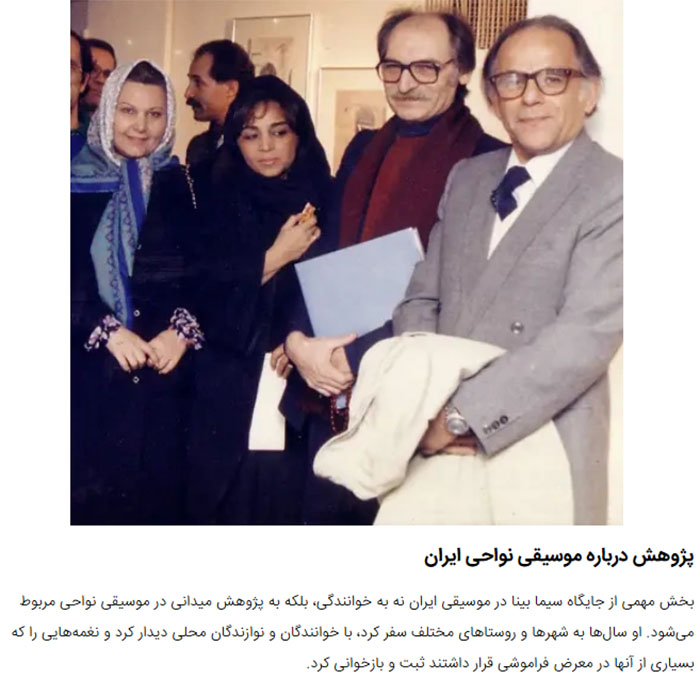
This multidisciplinary identity is increasingly relevant in contemporary discussions of cultural heritage.
Preservation is rarely achieved by a single profession.
It requires artists, researchers, educators, archivists, institutions, and communities.
Bina’s career brought several of these roles together in one person.
Sima Bina and the Preservation of Iranian Folk Music
Iran possesses an enormous diversity of musical traditions.
But cultural change can threaten oral traditions.
Urbanization, migration, changing media consumption, generational differences, and the decline of traditional community structures can all affect how songs are transmitted.
Digital recording has created new opportunities for preservation.
Yet documentation remains essential.
Sima Bina’s work belongs to a generation of artists who recorded and transmitted traditions before many of them were widely available through digital platforms.
Her work therefore has historical value.
Why the Bita Prize Matters for Iranian Culture
The Bita Prize has become an important form of recognition for Iranian and Persian artistic achievement.
For Sima Bina, receiving the 16th edition represents recognition not only of individual artistic talent but of an entire body of cultural work.
The Stanford event also provides an opportunity to bring Iranian music and cultural heritage into an academic environment.
Stanford’s Iranian Studies program has maintained a broader program of lectures, performances, and cultural events dedicated to Iranian studies. The university’s event archive confirms that the Sima Bina ceremony was part of this ongoing programming.
November 9, 2026 | 6:01 pm