Kim Jong Un Calls for Artificial Intelligence and Automation in North Korea’s Weapons Systems
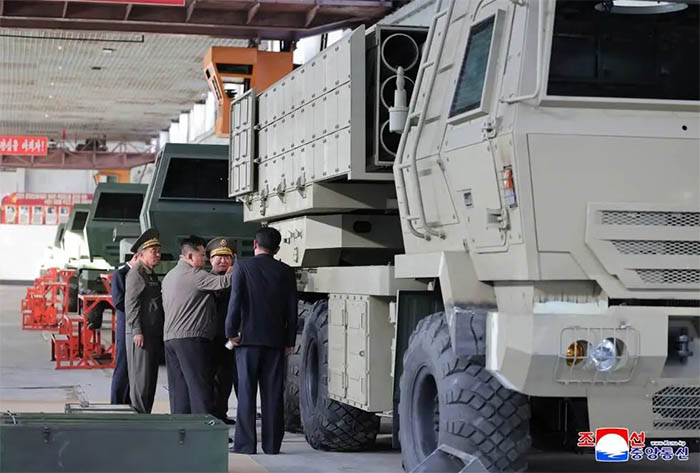
The combination of military AI and automated manufacturing could therefore become part of North Korea’s effort to increase weapons production while modernizing its industrial processes.
North Korea Wants to Increase Military Production
Another major theme in Kim Jong Un’s latest factory visits was production capacity.
North Korean state media said Kim called for continued expansion of production capacity and modernization of technical processes.
He also emphasized improvements to production conditions and the technological infrastructure of military factories.
This suggests that the North Korean government views industrial capacity as a strategic component of military power.
Developing a sophisticated weapons prototype is different from producing large numbers of reliable systems.
Military power depends not only on technology but also on manufacturing capacity, maintenance, supply chains, trained personnel, infrastructure and the ability to sustain production.
The emphasis on factories therefore matters because North Korea appears to be focusing on the industrial base supporting its armed forces.
This is particularly relevant to artillery.
Artillery warfare can consume large quantities of ammunition, spare parts and replacement equipment.
A military force seeking to maintain a large-scale conventional capability needs an industrial system capable of replenishing stocks.
Kim’s visits indicate that North Korea is continuing to prioritize this manufacturing dimension.
Automation of North Korean Weapons
Kim also called for higher levels of automation in artillery weapons.
Automation is closely related to artificial intelligence but is not identical to AI.
An automated system may follow predefined processes without using advanced AI.
For example, automated loading, positioning, navigation or control systems can reduce the amount of manual labor required.
AI can potentially add decision-support or perception capabilities to such systems.
The combination of automation and AI could therefore produce increasingly sophisticated weapons platforms.
North Korea’s stated interest in automation may reflect a broader global trend toward reducing the human workload associated with military operations.
Modern militaries are increasingly experimenting with unmanned aircraft, autonomous ground vehicles, automated surveillance systems and robotic logistics.
North Korea has also increasingly showcased drones.
Images released during Kim Jong Un’s factory visits showed facilities associated with unmanned aerial systems, according to outside reporting.
The growing presence of drones is particularly relevant because unmanned systems are relatively adaptable.
They can be used for surveillance, reconnaissance, communications, decoy operations and, depending on their configuration, strike missions.
September 20, 2026 | 7:26 pm