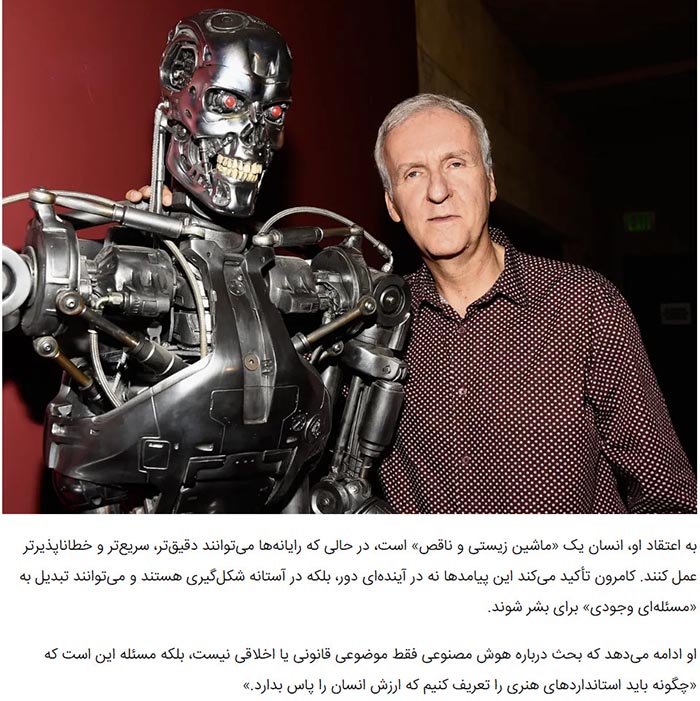
James Cameron Warns of AI Apocalypse: How “Terminator” Predictions Could Become Reality
“My goal wasn’t necessarily to make money,” Cameron clarified. “It was to understand what developers think, what resources are needed, and how to improve the technology to produce big films more efficiently.”
However, many critics see this as a contradiction—while Cameron warns of AI’s dangers in Terminator-style scenarios, he also benefits from AI tools in his own filmmaking process. Social media users on X (formerly Twitter) have called him a “hypocrite,” pointing out the irony of advocating for caution while actively integrating AI into film production.
One user remarked:
“You made two films that showed exactly what disaster human trust in AI can lead to, and now you’re defending it?”
The Future of AI in Hollywood and Beyond
Cameron’s stance reflects a broader debate about AI’s role in the entertainment industry. Many filmmakers and studios see AI as a tool to cut costs, enhance visual effects, and accelerate production timelines. Yet, critics warn that reliance on AI-generated content could compromise artistic integrity and diminish the unique human touch that defines great art.
Interestingly, Cameron has publicly stated that his upcoming film Avatar: Fire and Ash, scheduled for release on December 19, will not use generative AI technology. This decision underscores the ongoing tension between technological innovation and ethical concerns.
Key Takeaways:
- James Cameron warns of AI’s potential to cause an existential threat to humanity, likening it to Skynet from The Terminator.
- He emphasizes the loss of human purpose and jobs as the primary danger posed by unchecked AI development.
- Cameron’s involvement with AI companies like Stability AI has drawn accusations of hypocrisy, given his warnings.
- The filmmaker aims to use AI to reduce film production costs, especially for large-scale visual effects-heavy movies.
- Critics argue that relying on AI for creative work risks compromising artistic quality and human uniqueness.