Asghar Farhadi’s “Parallel Tales” Arrives at Cannes: A Red Carpet Defined by Cinema, Elegance, and Global Anticipation
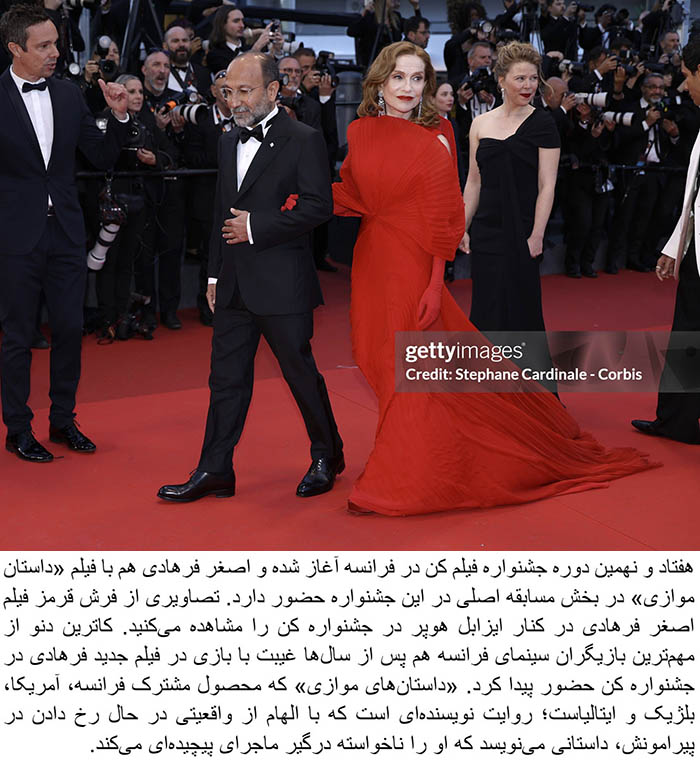
On the evening of May 14, 2026, the Palais des Festivals in Cannes transformed once again into the symbolic center of world cinema. Flashbulbs erupted in rapid succession across the Croisette. Limousines rolled slowly toward the famous staircase. Journalists from every major entertainment publication leaned over barriers with microphones and cameras raised high into the Mediterranean night. Fans gathered for hours hoping to catch a glimpse of the actors and filmmakers whose work shapes the emotional memory of modern cinema.
Yet among all the premieres, screenings, and gala appearances that define the Cannes Film Festival each year, one arrival generated a distinct atmosphere of anticipation: the red carpet premiere of “Histoires Parallèles” (“Parallel Tales”), the latest film from Iranian filmmaker Asghar Farhadi.
Farhadi’s arrival at Cannes carried the weight of artistic expectation rarely attached to contemporary directors. For more than two decades, he has built a reputation as one of international cinema’s most meticulous observers of human behavior. His films have explored moral conflict, social tension, family structures, emotional secrecy, and the fragile boundaries between truth and perception. Every new project attached to his name immediately becomes one of the most discussed titles on the global festival calendar.
At the 79th annual Cannes Film Festival, “Parallel Tales” was not merely another premiere. It became an event around which conversations about contemporary cinema, international storytelling, and auteur filmmaking quickly gathered momentum.
The red carpet itself reflected that significance.
French cinema icon Isabelle Huppert arrived alongside Farhadi in one of the evening’s most photographed appearances. Their collaboration alone had generated months of speculation before Cannes officially unveiled the festival lineup. The pairing of Farhadi’s emotionally layered filmmaking with Huppert’s extraordinary screen presence represented the convergence of two towering artistic forces from different cinematic traditions.
As photographers captured images outside the Palais des Festivals, the atmosphere around the premiere balanced glamour with seriousness. Unlike blockbuster premieres dominated entirely by spectacle, the arrival of “Parallel Tales” carried the aura of artistic prestige. The evening felt rooted in cinema as cultural conversation rather than simple celebrity display.
Additional stars joined the event throughout the night. Vincent Cassel and Catherine Deneuve appeared alongside Farhadi and Huppert, creating a visual tableau that embodied the intersection of generations, nations, and artistic legacies. The presence of India Hair added another dimension to the gathering, emphasizing the film’s strong connection to French cinema while maintaining its unmistakably international identity.
As guests climbed the staircase beneath the famous Cannes lights, the premiere quickly became one of the defining images of the 2026 festival.
The significance of the moment extended far beyond fashion photography or celebrity visibility. The red carpet represented the public unveiling of a film that had already become one of the most anticipated artistic works of the year.
In Cannes, premieres often function as cultural declarations. They announce not only a film, but a creative ambition. “Parallel Tales” arrived with exactly that sense of ambition.
The evening demonstrated why Cannes continues to occupy a unique place within world cinema. No other festival merges artistic seriousness, media intensity, historical prestige, and visual glamour with the same consistency. On this particular night, the festival once again became the ideal stage for Farhadi’s return.
May 14, 2026 | 6:34 pm