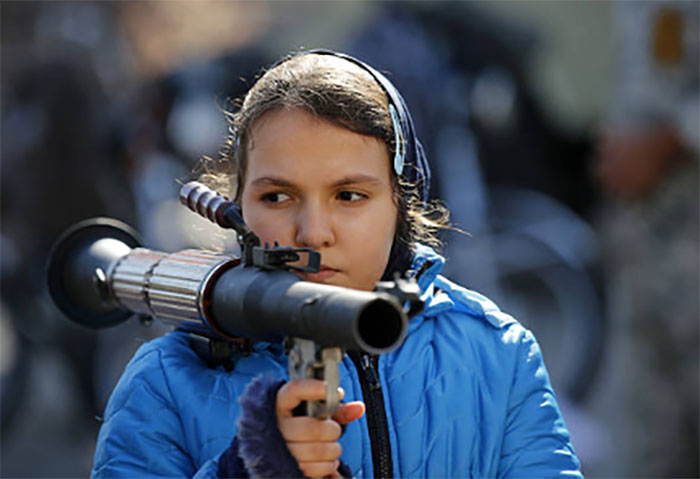
Women Military Training Center Opens in Tehran as Janfada Volunteers Receive Firearms and Military Training
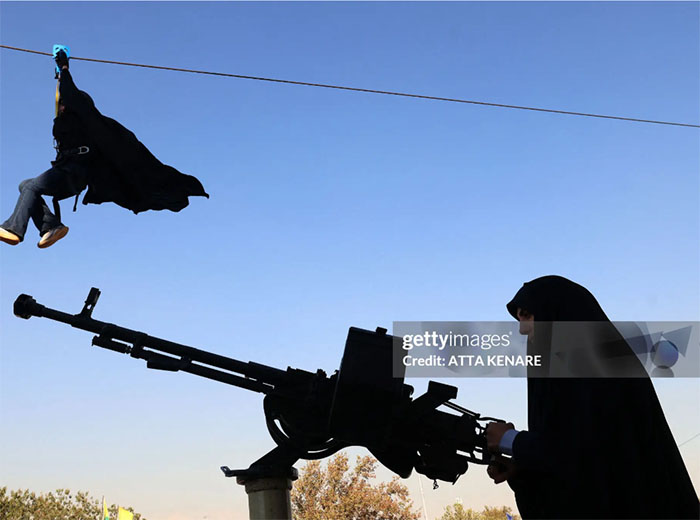
This is particularly important during a period when diplomatic negotiations are simultaneously taking place.
The military imagery can function as a reminder that Iran retains domestic mobilization capacity even while diplomatic channels remain open.
Tehran During Wartime
Tehran is one of the most politically and symbolically important cities in the Middle East.
The capital houses Iran’s government institutions, diplomatic organizations, major universities, businesses, cultural institutions and a large civilian population.
A military training initiative in central Tehran therefore has a very different symbolic impact from an isolated military exercise at a remote base.
Azadi Square is particularly recognizable.
The square has long been associated with Iranian political identity.
Using such a location for a volunteer military training center places the initiative directly within the public sphere.
It allows the activity to be photographed and circulated internationally.
As a result, images of women training with military equipment can become part of the global information environment surrounding the war.
The Role of Images in the Iran Conflict
The photographs from Tehran are important because visual information increasingly shapes how international audiences understand modern conflicts.
Images of missiles, drones, military exercises and damaged infrastructure can influence perceptions of military strength and national resilience.
The photographs of Iranian women participating in the Janfada training program add another dimension.
They show the conflict through the perspective of civilian participation.
The visual narrative is not simply about soldiers.
It is about volunteers.
It is about women.
It is about national mobilization.
It is about preparedness.
And it is about the idea that wartime participation can extend beyond traditional military institutions.
November 10, 2026 | 5:45 pm