Women Without Hijab: The Propaganda Paradox of Daily Life in Tehran During War
The Propaganda Paradox in Iran
Propaganda is generally understood as communication designed to influence how people perceive political events, institutions or social realities.
During periods of war, propaganda becomes particularly important.
Governments seek to emphasize national unity. Opponents emphasize resistance. Foreign governments highlight threats and humanitarian consequences. International media focus on destruction, political confrontation and civilian life.
Every side selects certain images.
This creates the propaganda paradox.
The more strongly a political system attempts to communicate a particular image of society, the more significant seemingly ordinary images can become when they reveal complexity that does not fit neatly into that narrative.
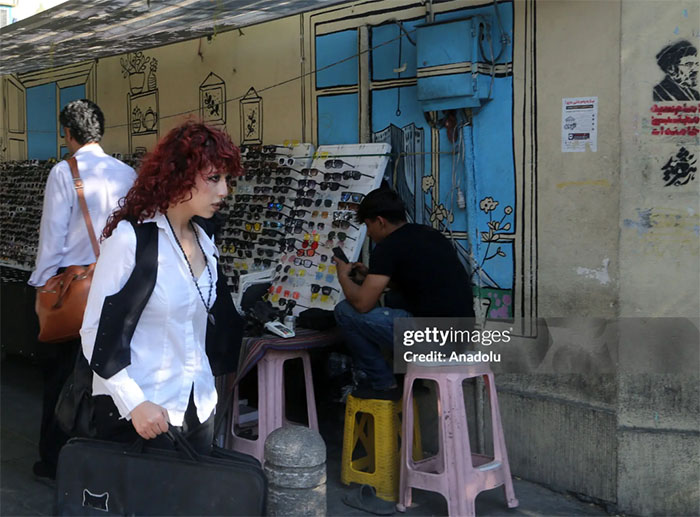
A photograph of a Tehran street may contain no explicit political protest.
Nevertheless, it can communicate something politically important.
A woman without hijab does not need to hold a protest sign.
A group of young people does not need to chant a slogan.
A commuter does not need to make a political statement.
Their ordinary behavior can demonstrate that society continues to evolve independently of official messaging.
Iranian Women Without Hijab and the Politics of Visibility
The question of why Iranian women are appearing without hijab cannot be answered with one explanation.
Some women may reject mandatory dress rules for political reasons. Others may see the hijab as a personal rather than governmental choice. Some may have gradually changed their behavior because social enforcement has weakened in particular environments. Others may continue wearing hijab because of religious conviction, family expectations or personal preference.
This distinction is essential.
Reducing every woman without hijab to a political activist can be just as simplistic as claiming that the absence of a hijab has no political significance.
The reality can contain both.
For many Iranian women, the central issue is not whether the hijab itself is good or bad.
The question is who has the right to decide what a woman wears.
That distinction became especially visible after the protests associated with the slogan “Woman, Life, Freedom.”
The movement transformed the hijab from a question of clothing into a broader discussion about autonomy, gender, state authority and individual freedom.
As a result, images of Iranian women without hijab acquired a symbolic meaning that extends beyond fashion.
September 14, 2026 | 6:05 pm