Tehran Today: Daily Life Continues as Iran-U.S. Tensions Escalate in October 2026
Tehran’s Public Spaces Become a Window Into the Political Climate
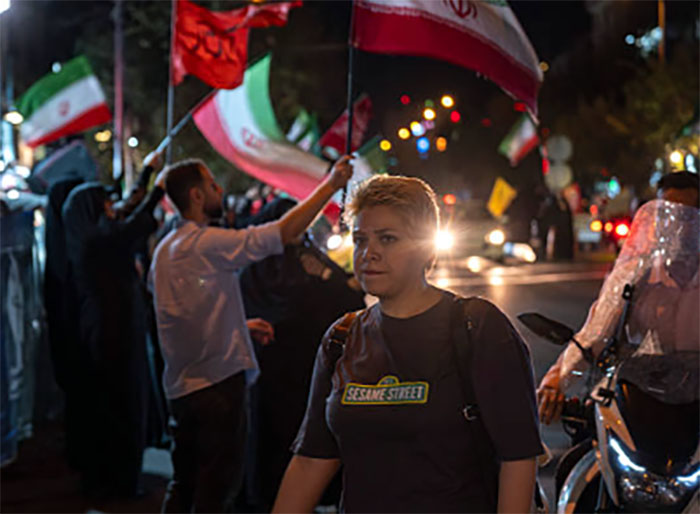
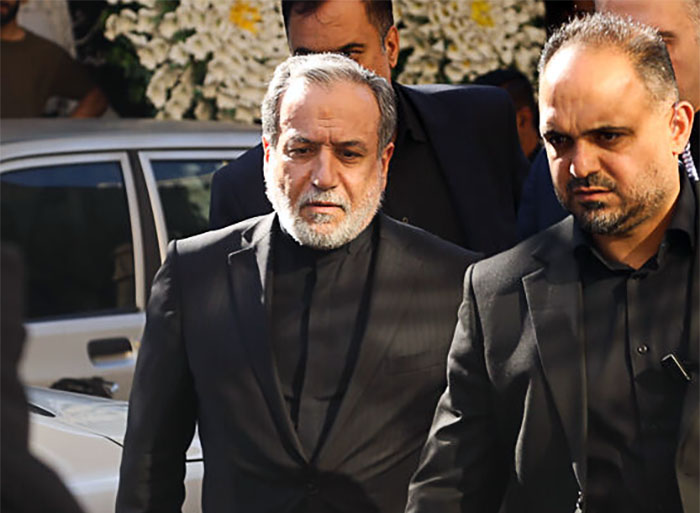
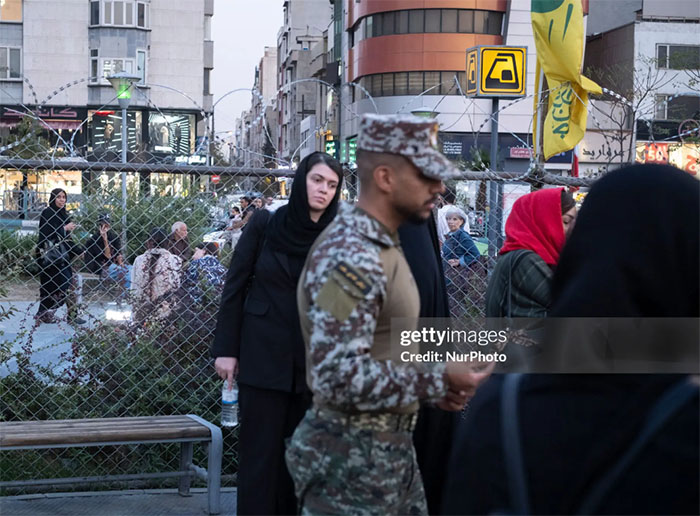
Taken together, the photographs document several different environments within Tehran: commercial streets, nighttime demonstrations, a public training camp, and a prominent political billboard.
Each location offers a different perspective on the atmosphere in the Iranian capital.
Commercial districts show people moving through familiar urban environments. Demonstrations bring political supporters and national symbols into public view. Military training activities place questions of preparedness and security at the center of attention. The billboard communicates a political message about Israel and its leadership.
The images therefore provide more than a collection of unrelated street scenes. They show how everyday life, political expression, national identity, and security-related activities can occupy the same urban landscape.
However, the photographs do not establish how residents feel about these developments. A person walking past a demonstration may support its message, oppose it, or simply be going about daily business. A pedestrian in a commercial district cannot be assumed to be unaffected by the wider political climate.
Understanding the public mood requires additional evidence, including interviews, surveys where available, reporting from different neighborhoods, and analysis of economic and social conditions.
What Can Photographs Tell Us About Life During a Geopolitical Crisis?
Photography can capture details that are difficult to communicate through official statements alone.
A crowded sidewalk, a national flag, a training simulator, or a political billboard provides a concrete visual reference for events occurring at a particular time and place.
Yet photographs have limitations. They select a moment, a location, and a particular angle. They may not show what happened immediately before or afterward, and they cannot independently verify the broader political claims associated with the scene.
The images from October 11 and 12 should therefore be read as visual evidence of the activities described in their captions, not as a complete picture of Iranian public opinion or national security.
This distinction is particularly important when images circulate internationally through news websites, social media platforms, and search engines.
A headline claiming that Tehran is operating normally across the entire city would go beyond what the supplied photographs demonstrate. Likewise, claiming that the images prove an imminent military confrontation would overstate their evidentiary value.
A more accurate conclusion is that ordinary urban activity, anti-U.S. demonstrations, military training, and anti-Israel political messaging were all visible in the locations documented during this period.
October 13, 2026 | 6:09 pm