Tehran Today: Daily Life Continues as Iran-U.S. Tensions Escalate in October 2026
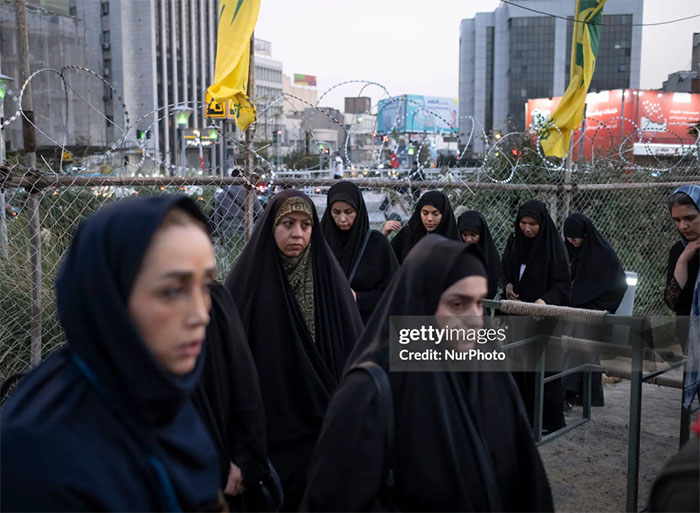
Enghelab Square Billboard Targets Israel and Benjamin Netanyahu
Another prominent image from Tehran shows a large anti-Israel and anti-Netanyahu billboard displayed at Enghelab Square on October 12, 2026.
According to the supplied caption, the billboard depicts Israeli Prime Minister Benjamin Netanyahu addressing an empty hall. Persian-language messages on the display include the phrases “More isolated with each passing day” and “Al-Aqsa Flood is a definite defeat for the Zionist regime.”
The billboard uses political imagery and written messaging to communicate a particular interpretation of the conflict involving Israel and its opponents.
Its depiction of Netanyahu addressing an empty hall appears intended to convey isolation. The accompanying language frames the conflict in terms of political defeat and opposition to Israel.
These are messages promoted by the billboard, not independently established conclusions about Netanyahu’s international standing or the military and political outcome of the conflict.
The Meaning of the Billboard’s Political Messaging
Political billboards have long been used in Tehran to communicate government-aligned messages about domestic affairs, foreign policy, historical events, and regional conflicts.
Enghelab Square, whose name means Revolution Square, is a prominent public space associated with Tehran’s urban and political life. Large displays in such locations can reach pedestrians, motorists, and other people moving through the city.
The location gives the billboard visibility beyond a conventional advertisement or online political statement. It places the message directly within the capital’s public environment.
The reference to “Al-Aqsa Flood” is also significant. The term is associated with the Hamas-led attacks on Israel on October 7, 2023, and the conflict that followed. The wording on the billboard uses this terminology to frame the confrontation through the political narrative expressed by the display.
The billboard’s claim that the campaign represents a definite defeat for Israel should be attributed to the message itself. Determining the outcome of a conflict requires analysis of military developments, political objectives, casualties, diplomatic consequences, and longer-term regional effects.
Iran-Israel Tensions and the Wider Middle East
Iran-Israel relations have been shaped by strategic rivalry, competing regional objectives, security concerns, and disputes involving armed groups and military operations.
The relationship has also become increasingly important to the wider international community because a direct confrontation between the two countries can affect regional stability, energy markets, diplomatic relations, and the security of neighboring states.
Iranian political messaging frequently presents opposition to Israel as a central component of the country’s regional position. Israeli leaders, meanwhile, have repeatedly expressed concerns about Iranian military capabilities and Tehran’s support for regional armed groups.
These competing positions form part of a broader regional security environment involving the United States and several Middle Eastern countries.
The billboard photographed at Enghelab Square reflects one side of this political confrontation. It should be interpreted as an example of public messaging rather than a neutral assessment of the balance of power.
For readers searching for Iran Israel tensions October 2026, Benjamin Netanyahu Tehran billboard, Enghelab Square Tehran, and Iran anti-Israel messaging, the photograph illustrates how geopolitical disputes are represented in public spaces.
October 13, 2026 | 6:09 pm