Sima Bina Receives the 16th Bita Prize from Stanford University
Stanford highlights her extensive work as a performer, researcher, and educator. The university describes her efforts to travel to different regions, learn from local musicians, record traditional melodies, and preserve musical material associated with different Iranian communities.
This makes the Bita Prize a recognition of both artistic excellence and cultural preservation.
Sima Bina’s Early Life in Khorasan
Sima Bina was born in 1945 in Khorasan, Iran.
Her childhood environment played an important role in her later relationship with folk music.
Khorasan has one of the richest and most distinctive musical cultures in Iran. Its geographical position, historical connections, local languages, dialects, poetry, religious traditions, migration patterns, and diverse communities have produced a remarkable range of musical forms.
For Bina, this was not simply an academic subject.
It was part of her childhood experience.
Traditional melodies were present around her from an early age, and her family environment helped introduce her to music.
This early exposure became the foundation for a career that would eventually take her from Iranian radio to international concert halls and university cultural programs.
Sima Bina’s Family and Musical Background
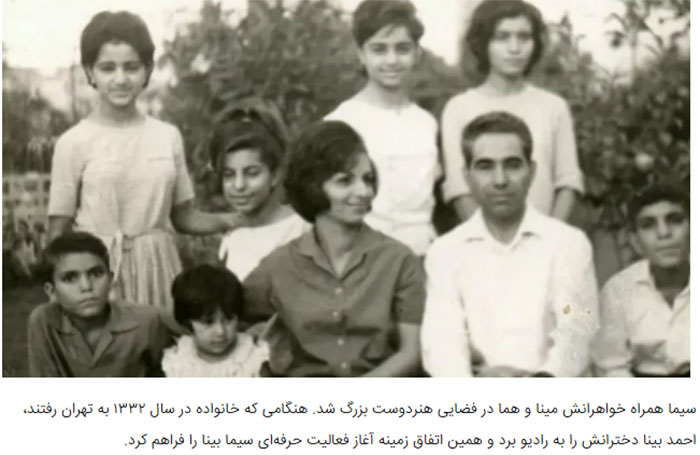
Bina grew up in a family where music and poetry were valued.
Her father, Ahmad Bina, was associated with music and poetry and encouraged his daughter’s artistic abilities.
This family environment was particularly important because Bina began singing at a remarkably young age.
Rather than encountering traditional music only later as an academic discipline, she encountered it through family, community, memory, language, and everyday cultural experience.
That distinction would eventually become one of the defining characteristics of her work.
Bina’s approach to folk music was not simply technical.
It was deeply connected to lived experience.
November 9, 2026 | 6:01 pm