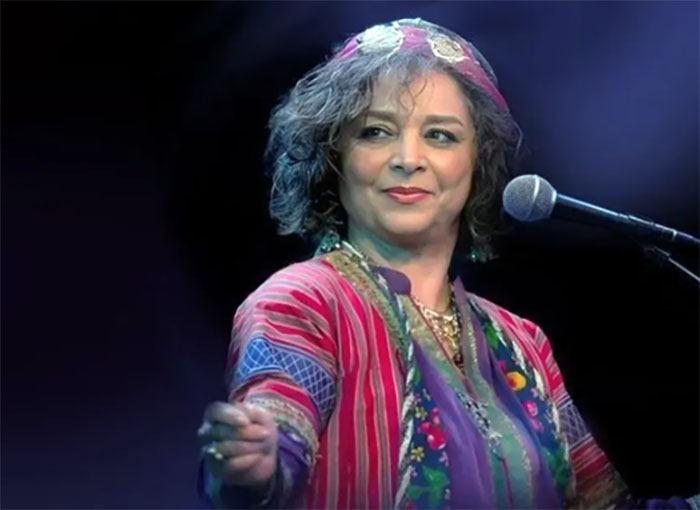
Sima Bina Receives the 16th Bita Prize from Stanford University
Khorasan: The Cultural Landscape Behind Sima Bina’s Music
To understand Sima Bina, it is essential to understand Khorasan.
Khorasan has historically been one of the major cultural regions of the Iranian world.
Its geography connects different parts of Iran and Central Asia, while its historical development has brought together diverse linguistic, ethnic, religious, and musical traditions.
South Khorasan, including the areas associated with Birjand and Khusf, has its own distinctive musical heritage.
For Bina, this environment was not an abstract research topic.
It was part of her personal background.
This personal connection gave her work an unusual authenticity.
She was not simply studying Khorasani music from a distance.
She was returning to musical traditions connected to her own cultural roots.
The Village, the Singer and the Archive
Much of Iran’s regional music historically existed outside formal institutions.
A song might be known by a small group of people in one village.
Another version could exist in a neighboring town.
A melody might be performed differently by men and women.
Lyrics might change according to dialect.
A singer might add personal ornamentation.
There might be no written score.
There might not even be a formal title.
This is why field research is so important.
A researcher must go to the source.
Sima Bina’s work reflects this approach.
Her research involved encounters with local singers and musicians and the documentation of songs that might otherwise have remained vulnerable to disappearance.
Why Women’s Voices Matter in Iranian Folk Music
Another important dimension of Bina’s work is the preservation of women’s musical traditions.
Women have historically played a major role in transmitting songs within Iranian communities.
Lullabies are an obvious example.
Wedding songs, work songs, domestic songs, mourning traditions, and other forms of oral music have also often been transmitted through women.
Yet such traditions can be underrepresented in formal musical archives.
By documenting women’s songs and lullabies, researchers can preserve aspects of Iranian cultural history that conventional histories of music may overlook.
This gives Bina’s research another layer of significance.
November 9, 2026 | 6:01 pm