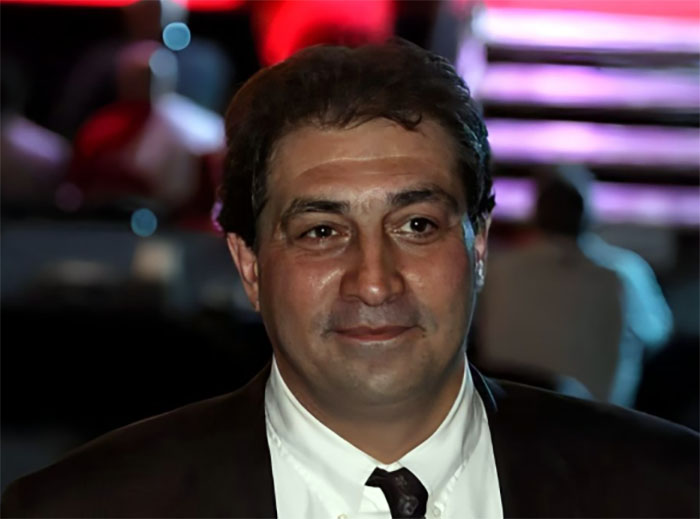
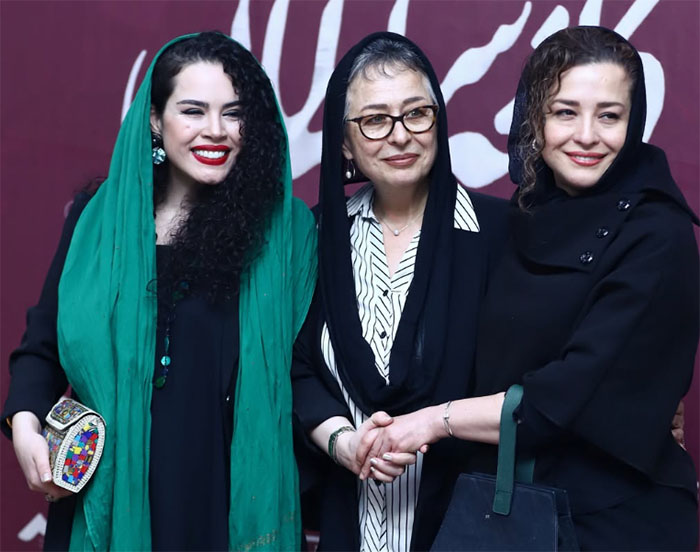
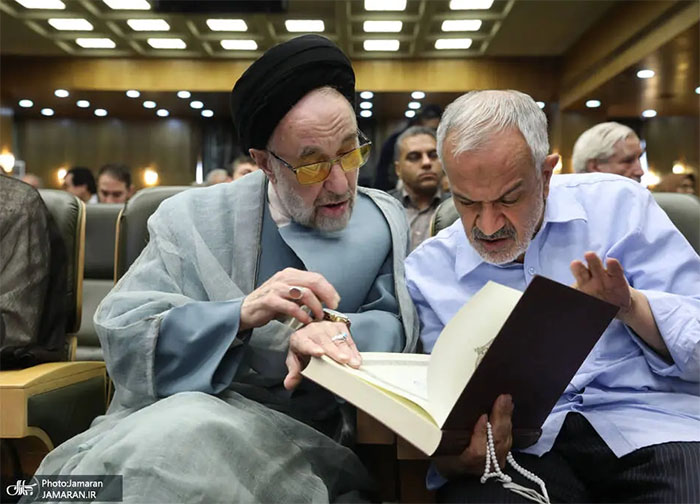
Seyyed Mohammad Khatami at the Baran Foundation Meeting
The University Question and Historical Criticism
Any contemporary discussion of Khatami can also become entangled with memories of political confrontations during his presidency.
The 1999 Tehran university protests, particularly the events surrounding the University of Tehran dormitories, remain one of the most controversial episodes associated with the reform era. The protests began after the closure of the reformist newspaper Salam and developed into broader demonstrations involving students and supporters of political reform.
The episode became a defining moment in the relationship between the reform movement, Iranian students and the country’s political institutions.
Khatami’s supporters have often argued that the reformist government faced significant institutional constraints and that many of the government’s objectives could not be implemented because power was distributed among institutions outside the president’s direct control.
Critics, meanwhile, have questioned the government’s response to the protests and the extent to which the administration was able to protect students and advance political freedoms.
These competing interpretations remain important when examining the historical image of Mohammad Khatami.
It is therefore important to distinguish between documented historical events, political criticism and allegations directed at individual figures.
The phrase sometimes used in partisan commentary to describe Khatami or other political figures does not automatically constitute an established historical fact. A credible account should identify accusations as accusations and distinguish them from independently verified events.
That distinction becomes especially important in SEO journalism, where sensational claims can quickly become detached from their original context.
Mohammad Khatami and the Reform Movement in Iran
The term Iranian reform movement remains strongly connected to Khatami.
The movement emerged around the idea that political and social change could be achieved through elections, legislation, civil society and gradual institutional reform.
This was different from revolutionary politics.
The reformist approach generally sought to work within the Islamic Republic’s existing political framework while attempting to reinterpret its institutions and expand political participation.
Khatami became the movement’s most internationally recognized representative during his presidency.
The reformist period also produced a new political vocabulary in Iran.
Terms such as civil society, political participation, citizens’ rights, freedom of expression, rule of law and dialogue among civilizations became increasingly prominent in political discussions.
For many young Iranians at the time, the reform movement represented the possibility of political change without revolutionary upheaval.
For its opponents, however, reformism sometimes appeared to challenge the ideological foundations of the Islamic Republic.
This conflict between reform and institutional conservatism became a recurring feature of Iranian politics.
September 4, 2026 | 7:51 pm