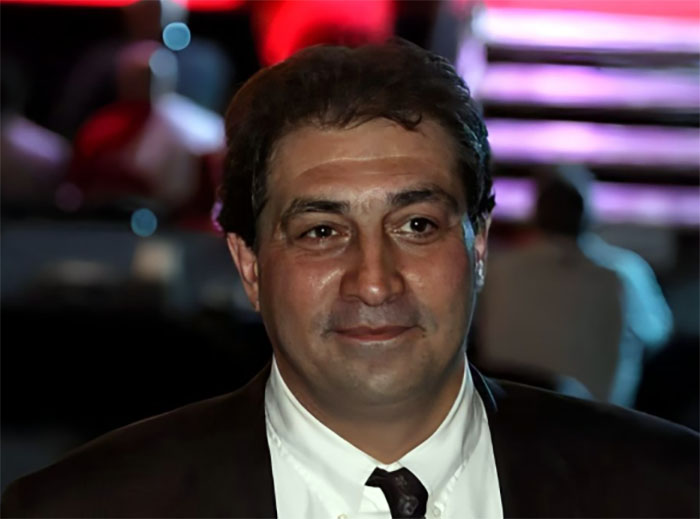
Seyyed Mohammad Khatami at the Baran Foundation Meeting

A contemporary understanding of religion does not necessarily mean creating an entirely new religion. Instead, it can mean reconsidering how established religious principles are interpreted in light of changing circumstances.
Soroush reportedly emphasized an approach based on reason, the Quran and ijtihad, or interpretive reasoning within Islamic jurisprudence. He also criticized interpretations that reduce religion to individual worship, obedience to political authority, or exclusive claims to religious truth.
This places the discussion within a long-running intellectual tradition in Iran.
Iranian religious thinkers have repeatedly asked whether religious principles can be interpreted in ways that are compatible with modern concepts of citizenship, freedom, pluralism and human dignity.
The discussion becomes especially complicated when religion is not merely a private belief system but also forms part of the institutional structure of the state.
Religion and the Modern Iranian Individual
The relationship between religion and society has changed dramatically throughout Iranian history.
Iran remains a country in which religion has enormous historical, cultural and political significance. At the same time, Iranian society contains a wide variety of religious attitudes.
Some citizens maintain deeply traditional religious beliefs.
Others interpret Islam through reformist or modernist perspectives.
Some distinguish between personal faith and political authority.
Others have become increasingly secular.
There are also many people whose relationship with religion is complex, changing or highly personal.
This diversity means that the phrase “the Iranian people” cannot accurately describe a single attitude toward religion.
Instead, contemporary Iran contains multiple understandings of faith, identity and public life.
The discussion at the Baran Foundation meeting is therefore relevant precisely because it addresses the problem of how religious ideas can respond to a plural and changing society.
Mohammad Khatami and Reformist Thought
To understand why Mohammad Khatami remains an important figure in discussions of religion and modernity, it is necessary to consider his political background.
Khatami served as president of Iran from 1997 to 2005 and became internationally known for promoting the concept of a “Dialogue Among Civilizations.”
His presidency became closely associated with Iran’s reform movement and with ideas concerning civil society, political participation, rule of law and greater engagement between Iran and the international community.
His political vocabulary frequently emphasized dialogue rather than confrontation.
That intellectual approach also connects naturally with the subject of contemporary religion.
If modern society contains multiple identities, beliefs and political perspectives, then dialogue becomes an important mechanism for managing disagreement.
Rather than assuming that disagreement must end in exclusion, dialogue attempts to establish a space in which different viewpoints can coexist.
Khatami’s international advocacy of dialogue among civilizations also helped make him one of Iran’s best-known political thinkers outside the country.
September 4, 2026 | 7:51 pm