The Odd Faces of Children in the Blackened Faces Ta’ziyyah Ceremony: A Tradition of Nosh Abad, Kashan
Ta’ziyyah is a traditional Iranian religious theater that combines storytelling, poetry, music, and symbolic performance. It has been performed for generations as a way of remembering the events of Karbala and honoring the sacrifice and struggles connected with that historical moment. Unlike ordinary theater, Ta’ziyyah is not only a performance for entertainment. It is a spiritual and emotional experience in which performers and audiences become connected through shared memory and mourning.
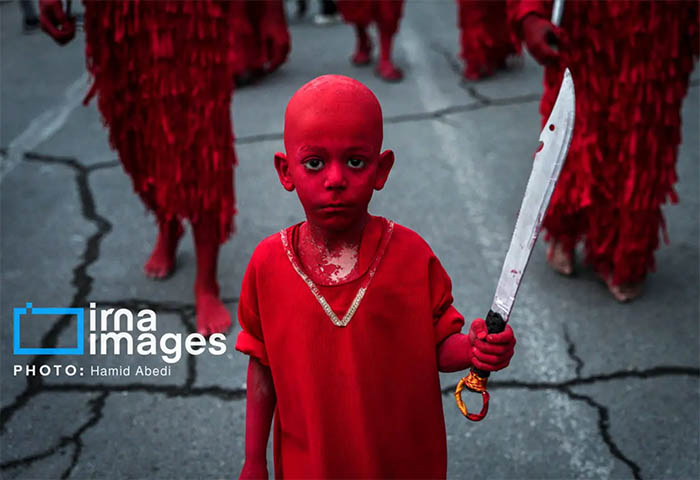
The presence of children in this ceremony adds another emotional dimension. Children naturally represent innocence, hope, and the future, but in the Ta’ziyyah of Nosh Abad, their painted faces reflect the sadness and sorrow associated with the Karbala narrative. This contrast between childhood innocence and the serious atmosphere of mourning creates one of the strongest visual elements of the ceremony.
The blackened faces of the children have become a recognizable symbol of the Nosh Abad Muharram ceremonies. Many photographers are drawn to these moments because the children’s expressions often capture the emotional heart of the event. Their silent presence among the crowd, wearing traditional clothing and participating in a centuries-old ritual, creates images that communicate a story without the need for words.
The Karbala Caravan Entrance Ceremony in Nosh Abad is unique because it brings together different symbolic characters connected with the historical events of Karbala. Participants portray various figures, including respected spiritual personalities, angels, supporters, and opposing characters. Through costumes, movements, and dramatic presentation, the ceremony creates a living representation of a historical story that continues to hold deep meaning for many people.
June 24, 2026 | 8:46 pm