Nadereh Rezaei’s Dismissal: From the 97 Million NIS Paycheck to the Reaction to the Cancellation of Homayoun Shajarian’s Concert
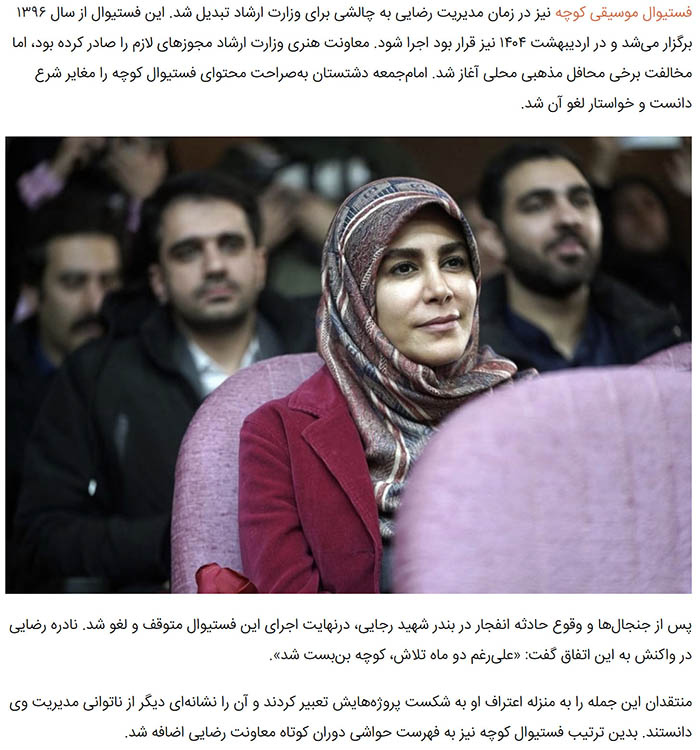
Art, Expression, and State Control
Rezaei’s tenure was characterized by attempts to liberalize Iran’s cultural scene, but these efforts often clashed with conservative institutions like the Islamic Revolutionary Guard Corps and religious authorities. Her efforts to promote music festivals, artistic exhibitions, and cultural events faced constant pushback.
The controversy surrounding the Kocheh music festival exemplified how cultural initiatives could become flashpoints for ideological battles. The festival was seen by religious conservatives as promoting un-Islamic values, leading to its cancellation and fueling debates on artistic freedom versus religious morality.
The Role of Women in Iran’s Governance
Rezaei’s appointment was a historic milestone, but her subsequent dismissal highlighted the persistent gender barriers in Iranian politics. Despite her groundbreaking role, her management style and controversial decisions made her vulnerable to conservative backlash.
Her experience underscores the challenges faced by women leaders in Iran, where gender equality efforts often clash with societal and institutional resistance.
The Economic and Social Dimensions
The Salary Scandal: A Reflection of Elite Privilege
The revelation of Rezaei’s 97 million NIS salary was more than just a scandal; it was a mirror reflecting Iran’s deep socio-economic inequalities. Ordinary Iranians faced inflation rates over 50%, unemployment, and rising poverty, making such a salary appear as an emblem of elite privilege and detachment from ground realities.
The public’s outrage was compounded by the perception that government officials were insulated from the economic suffering of the population. This disconnect fueled protests and calls for greater transparency and accountability in public salaries.
Cultural Funding and Resource Allocation
Her tenure also highlighted issues of resource allocation in Iran’s cultural sector. Critics argued that lavish salaries and high-profile festivals diverted funds from essential social needs, raising questions about priorities within the government.
September 9, 2025 | 11:58 amMore stories
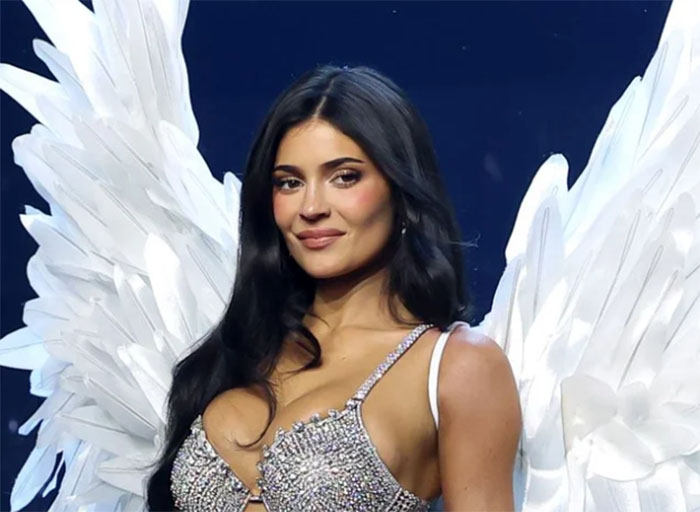
Kylie Jenner Makes Victoria’s Secret Fashion Show Debut in $50 Million Fantasy Bra
Introduction Babak Takhti is an Iranian writer, publisher and the only son of Gholamreza Takhti, the legendary Iranian freestyle wrestler … Continue reading ➝
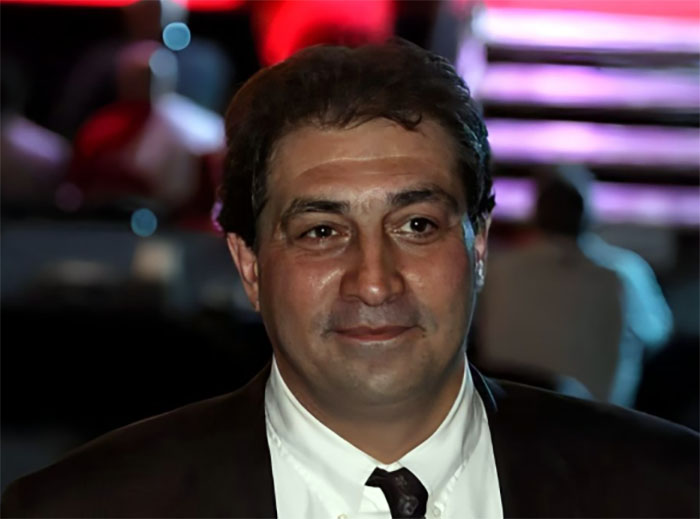
Who Is Babak Takhti? Gholamreza Takhti’s Only Son, His Family, Career, and His Father’s Controversial Death
Introduction Babak Takhti is an Iranian writer, publisher and the only son of Gholamreza Takhti, the legendary Iranian freestyle wrestler … Continue reading ➝
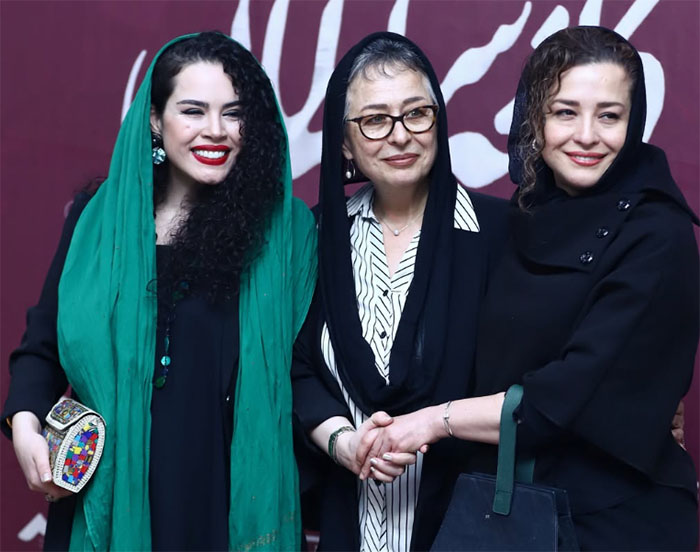
Azita Hajian, Mehraveh Sharifinia and Melika Sharifinia Attend Cafe Soltan Private Screening at Megamall Cinema
Introduction The private screening of Cafe Soltan, the Iranian feature film directed by Mostafa Razagh-Karimi and produced by Morteza Razagh-Karimi, … Continue reading ➝

Bot (Bet) Movie: Hamid Nematollah’s Drama Holds Private Screening at Galleria Cinema Complex
Introduction The Iranian social drama Bot, also transliterated as Bet and associated with the English title Idol, has attracted attention … Continue reading ➝
10 Fascinating Stories About Most Famous Actresses: Behind-the-Scenes Secrets From Iconic Films and TV Shows
Introduction 1. Gohar Kheirandish in Banoo: The Makeup That Could Not Hide Her Beauty Film: Banoo (The Lady) Director: Dariush … Continue reading ➝