Mitra Hajjar: From Award-Winning Actress and Crystal Simorgh Winner at Fajr Festival to Her Arrest in 1401
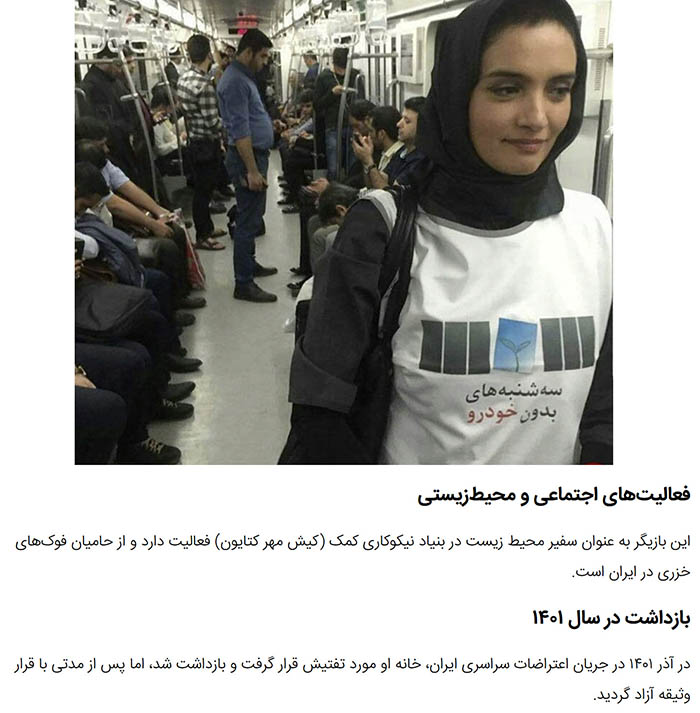
Social and Environmental Activism
Mitra Hajjar is actively involved in social and environmental causes. She works as an environmental ambassador for the Kemek Charity Foundation (Kish Mehr Katayoun), advocating for the protection of Caspian seals and raising awareness about environmental issues in Iran.
Her activism aligns with her broader commitment to social justice, cultural preservation, and environmental sustainability. She often uses her platform to highlight important causes and encourage public participation.
Her dedication to social activism has earned her respect beyond her artistic achievements, positioning her as a role model for societal engagement.
Her Role in Iranian Cinema and Theater
Mitra Hajjar’s contribution to Iranian cinema and theater is significant. Her performances have helped elevate social issues, promote artistic innovation, and inspire a new generation of Iranian actors.
Her work in theater, including performances in Hamlet and Uncle Vanya, demonstrates her versatility and dedication to classical and contemporary drama. Her international theater performances have enhanced Iran’s cultural diplomacy.
Moreover, her collaborations with leading Iranian filmmakers have contributed to the richness and diversity of Iran’s cinematic landscape.
The Political Climate in Iran and Hajjar’s Political Engagement
Iran’s political landscape has always influenced its artistic community. Mitra Hajjar has been vocal about social justice and human rights, often reflecting her political stance through her art and public statements.
Her participation in protests and social movements has been met with both admiration and repression. Her outspoken nature led to her arrest during the protests in 1401, highlighting her courage and commitment to social change.
Her political engagement underscores her role not just as an artist but also as a social activist committed to advocating for change in Iran.
The 1401 Protests and Her Arrest
In December 1401, Iran experienced widespread protests sparked by economic hardships, political repression, and social grievances. During this turbulent period, Mitra Hajjar’s house was raided, and she was arrested by security forces.
Her arrest was widely reported in Iranian media and drew international attention. She was released on bail after a brief detention, but her detention raised concerns about artistic freedom, political repression, and human rights in Iran.
Her arrest symbolized the risks faced by Iranian artists and activists who challenge the status quo, and her case became a focal point for supporters of freedom of expression.
Reactions to Mitra Hajjar’s Arrest and Social Media Response
The arrest of Mitra Hajjar prompted an outpouring of reactions from her supporters, fellow artists, and human rights advocates. Social media platforms were flooded with messages demanding her release and protesting against repression.
Hashtags like #FreeMitraHajjar and #IranianArtistsResist trended globally, emphasizing solidarity with her and other detained activists. Many fans expressed concern over her safety and future.
International organizations and human rights groups condemned her arrest, calling for her immediate release and an end to artistic repression in Iran.
Her Release and Future Prospects
After her release on bail, Mitra Hajjar’s future remains uncertain. She has not publicly spoken about her arrest or current plans, but her supporters hope she will continue her artistic and social activism.
Her case has sparked debates about artistic freedom, political repression, and the role of artists in Iranian society. Many believe her experience will inspire future activism and artistic expression.
Her resilience and commitment to her principles suggest she will remain a prominent figure in Iranian cultural and social life.
Impact of Her Arrest on Iranian Artists and Society
Mitra Hajjar’s arrest sent shockwaves through Iran’s artistic community, highlighting the risks faced by artists who speak out against repression. It has prompted discussions about freedom of expression, censorship, and the importance of protecting artists’ rights.
Her case has also inspired a new wave of activism among Iranian artists and intellectuals, emphasizing the importance of social justice and human rights.
Her experience underscores the need for ongoing reform and greater protection for artists and activists in Iran.
Mitra Hajjar’s Contribution to Iranian Culture
Throughout her career, Mitra Hajjar has significantly contributed to Iran’s cultural landscape. Her performances have portrayed social issues, human emotions, and cultural identity, enriching Iranian arts.
Her international work has helped foster cultural exchange, showcasing Iran’s artistic talent on global stages. Her activism further emphasizes her role as a cultural ambassador advocating for social change.
Her legacy is marked by her artistic excellence, social engagement, and resilience in the face of repression.
Her Role as a Cultural and Environmental Ambassador
Mitra Hajjar’s work extends beyond acting. She actively promotes environmental sustainability, cultural preservation, and social justice.
As an ambassador for environmental causes, particularly for the Caspian seals, she raises awareness about ecological issues affecting Iran’s natural heritage.
Her multifaceted role as an artist and activist exemplifies her dedication to creating positive change through cultural and environmental advocacy.
Conclusion: Mitra Hajjar’s Legacy and Ongoing Journey
Mitra Hajjar’s journey—from winning the Crystal Simorgh at the Fajr Festival to her recent arrest—embodies the complex relationship between art, politics, and society in Iran. Her artistic achievements have made her a beloved figure, while her activism and courageous stand against repression have made her a symbol of resistance.
As she continues her journey, her legacy as an accomplished actress, social activist, and advocate for freedom remains intact. Her story inspires many Iranians and international audiences, illustrating the power of art to challenge injustice and foster societal progress.