Marta Shahbazi Alonso: Cambridge Scientist Dies at 41 in Tragic Spanish Train Accident
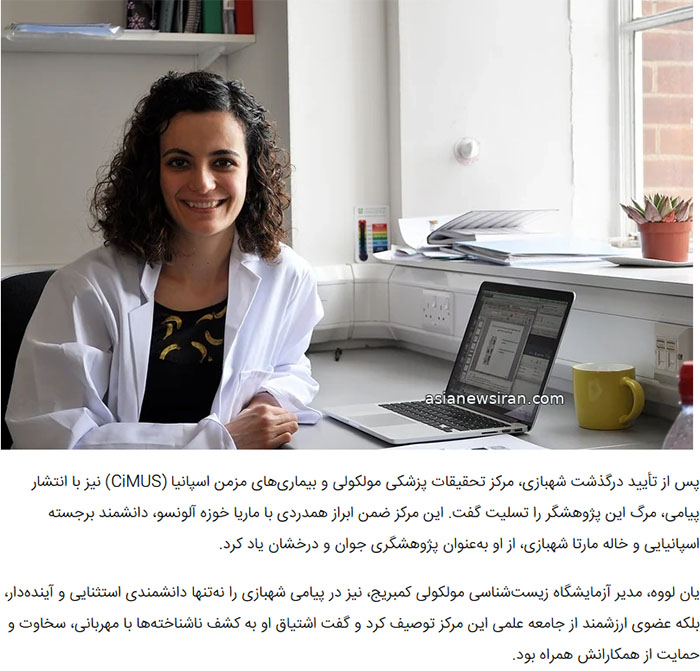
Shahbazi’s research helped scientists investigate how cells acquire different identities and how their behavior contributes to the organization of the developing embryo.
The work also created opportunities for other research groups around the world to adopt similar laboratory systems.
Her contribution was therefore not limited to one publication. It helped establish experimental methods that influenced an entire area of developmental biology.
Marta Shahbazi’s Research on Stem Cells and Cell Identity
Beyond her work on human embryo culture, Marta Shahbazi focused extensively on pluripotent stem cells.
Pluripotent stem cells are remarkable because they can develop into many different types of cells found in the body.
During early embryonic development, these cells undergo carefully controlled changes that determine their future identities and functions.
The timing and location of these changes are essential.
If cells differentiate at the wrong time or in the wrong location, the normal development of the embryo can be disrupted.
Shahbazi investigated the biological mechanisms that control these decisions.
Her research sought to understand how cells communicate with their environment, respond to physical conditions, and establish distinct developmental identities.
This work was relevant not only to embryology but also to wider questions in cell biology.
Understanding How Cells Become Specialized
One of the central questions in developmental biology is how cells that initially possess similar characteristics eventually become specialized.
For example, the cells of an early embryo must develop into different populations that will eventually contribute to tissues and organs.
This process requires carefully coordinated molecular and physical signals.
Shahbazi investigated the relationship between cell identity, cellular organization, and the surrounding environment.
Her research contributed to a better understanding of how the behavior of individual cells influences the development of larger biological structures.
These investigations also had potential implications for understanding conditions in which normal cellular organization becomes disrupted.
Her Research Group at the MRC Laboratory of Molecular Biology
In February 2020, Marta Shahbazi established her independent research group at the Medical Research Council Laboratory of Molecular Biology in Cambridge.
The appointment marked an important milestone in her career.
Moving from postdoctoral research to leading an independent scientific group represents a major professional transition for researchers.
It involves developing research programs, securing scientific resources, supervising students and postdoctoral researchers, collaborating with other laboratories, and setting long-term scientific priorities.
At the MRC LMB, Shahbazi became a Group Leader in the Cell Biology Division.
Her research focused on cell fate decisions in the early mammalian embryo.
She continued investigating the mechanisms that determine how stem cells acquire different identities during embryonic development.
Her laboratory also explored how physical interactions between cells influence their behavior.
November 4, 2026 | 6:10 pm