Marta Shahbazi Alonso: Cambridge Scientist Dies at 41 in Tragic Spanish Train Accident
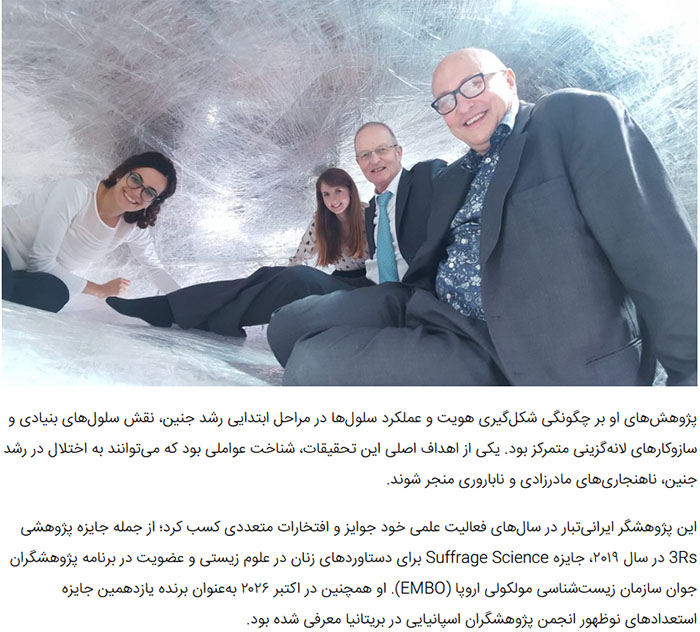
Marta Shahbazi’s Groundbreaking Research on Human Embryonic Development
One of the reasons Marta Shahbazi Alonso became internationally recognized was her pioneering contribution to research on early human embryo development.
Her work helped scientists study the period immediately following implantation, an important stage during which the embryo undergoes substantial structural and cellular changes.
Before these advances, researchers had limited opportunities to observe human embryos beyond approximately seven days after fertilization.
The difficulty was partly technical: scientists needed laboratory systems capable of supporting embryonic development beyond the point at which the embryo normally implants into the uterine lining.
Shahbazi contributed to the development of a method that made it possible to culture human embryos in vitro beyond implantation.
The 2016 Breakthrough: Growing Human Embryos in the Laboratory
In 2016, research involving Shahbazi and her colleagues was published in the prestigious scientific journal Nature.
The study demonstrated that human embryos could be maintained in laboratory culture for up to 14 days after fertilization, within the legal limit applicable in the United Kingdom.
This achievement represented a major advancement in developmental biology.
It allowed researchers to investigate biological processes occurring during a period that had previously been extremely difficult to study directly.
The research attracted international attention because it offered new possibilities for understanding how the human embryo develops after implantation.
It also created opportunities to investigate the mechanisms responsible for developmental abnormalities and early pregnancy failure.
The publication became widely recognized as a landmark contribution to human embryology.
The scientific journal Science subsequently named the research its Breakthrough of the Year, following a reader vote.
Why Is the 14-Day Human Embryo Research Important?
The first two weeks after fertilization represent a fundamental period in human development.
During this time, the embryo undergoes rapid cellular divisions and structural changes.
After implantation, additional developmental processes establish the organization that will eventually support the formation of different tissues and organs.
Understanding these processes is important for several areas of medicine and biological research.
November 4, 2026 | 6:10 pm