Manouchehr Nozari: The Voice That Made Generations Smile, A Legend of Radio, TV, and Cinema
The Political Turmoil and Its Impact on Art
The Iranian Revolution of 1979 marked a turning point. The new regime imposed censorship, and many artists faced suppression or exile. Manouchehr Nozari’s career was abruptly interrupted, and he was cut off from his beloved radio platform — his first and last home.
The Nickname “The Showcase of the Tyrant”
The revolutionary authorities nicknamed him “The Showcase of the Tyrant” because of his popularity and influence, which they viewed with suspicion. Despite not being a revolutionary artist from the beginning, Nozari’s voice was silenced, and he was forced into silence, reflecting the broader suppression of Iranian cultural figures.
Resilience and Return
Despite the ban, Nozari’s influence persisted. In 1987, brave editor Ahmad Shishegaran invited him back to radio during wartime, despite political risks. His return was celebrated as a heroic act, rekindling hope and nostalgia among Iranians.
From Radio to the Silver Screen
Manouchehr Nozari’s talent was not confined to radio. His foray into cinema, with films like Ayvallah (1950) and Khili Ham Mamnon (1951), marked the beginning of a new chapter. Despite his primary fame as a radio star, Nozari’s work in film and television showcased his range and dedication to the arts.
The First Iranian TV Host
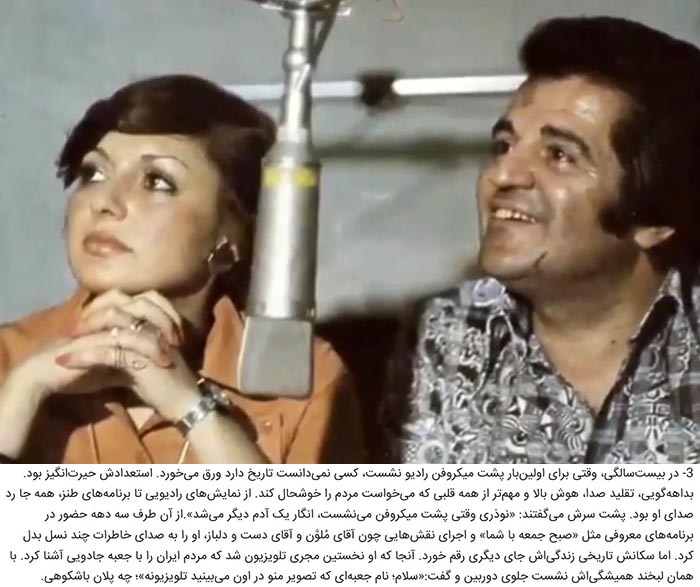
Nozari was the pioneer of introducing Iranian audiences to television. With his charming personality and natural charisma, he became the first TV host to introduce Iranians to the magic box. His famous phrase, “Hello; the name of the box in which you see my image is TV,” remains a nostalgic memory.
The Actor Who Launched Careers
Many Iranian cinema icons, including Aghasi, owe their success to Nozari’s mentorship and productions. His films, Ayvallah and Imaginations, served as launching pads for future stars like Googoosh and Jamshid Hashempour.
December 10, 2025 | 8:56 pm