Life in Tehran Amid Rising Iran-US Tensions: Inflation, Economic Crisis and Everyday Life in October 2026
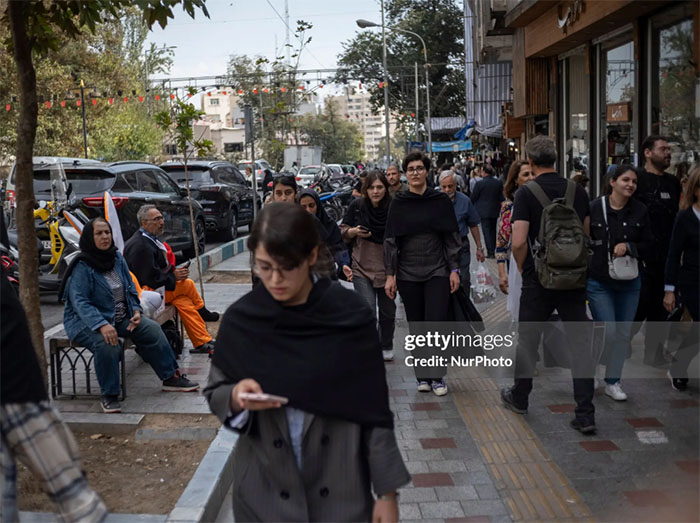
Economic Uncertainty and Business Investment
Businesses generally make investment decisions based on expectations about future demand, costs, financing and market conditions.
High inflation complicates those calculations because the future cost of equipment, wages and materials becomes harder to predict.
Geopolitical uncertainty adds another layer of risk. Companies may postpone investment if they are unsure whether supply routes will remain open, whether sanctions will change or whether regional conflict could disrupt operations.
Small businesses can be particularly vulnerable because they often have limited financial reserves and fewer options for obtaining credit.
A shop owner facing rising wholesale prices may need to increase retail prices, accept lower profit margins or reduce the range of products offered.
If customers simultaneously reduce spending, the business may face declining sales at the same time that operating costs increase.
These pressures can create a difficult cycle in which consumers have less money to spend while businesses have less capacity to invest and expand.
Tehran’s Public Spaces and the Visibility of Political Tensions
Political messaging remains visible in the supplied photographs of Tehran.
Large billboards depicting Iran’s slain supreme leader, Ayatollah Ali Khamenei, and banners carrying anti-US or anti-Israel messages appear in public spaces across the capital.
These images show how political symbolism forms part of the city’s public environment during a period of heightened tension.
Public banners and commemorative displays can serve several purposes. They may express official political positions, commemorate national figures, communicate messages of resistance or reinforce narratives about national security.
Their presence also reflects the role of public space in communicating political messages to residents and visitors.
However, the existence of a banner does not establish that every person who passes it shares its message. Tehran’s population includes people with diverse experiences, political views, economic circumstances and expectations for the future.
A careful assessment of public opinion requires more than photographs or official displays. It would need credible polling, interviews, independent reporting and other evidence that captures a broader range of perspectives.
The same principle applies to the anti-US and anti-Israel messaging visible in the images. It documents the presence of a political message, not the views of every Iranian citizen.
Commemorating Ayatollah Ali Khamenei
One photograph shows scooter commuters passing a large billboard depicting Ayatollah Ali Khamenei, who is described in the supplied caption as Iran’s slain supreme leader.
The image combines a prominent political symbol with the ordinary movement of people through the city.
For a publication covering these events, the political chronology and the circumstances surrounding Khamenei’s reported death should be independently verified before publication. The photograph alone cannot establish those details.
More broadly, Iran’s political leadership and the institutions surrounding it have long played a central role in shaping the country’s domestic and foreign policy.
Changes in leadership can introduce uncertainty about political priorities, security decisions and the direction of international negotiations. The consequences depend on the institutions involved, the succession process and the broader political circumstances.
For ordinary residents, political developments become especially consequential when they influence economic policy, public services, international trade or the risk of further conflict.
October 27, 2026 | 7:13 pm