The Islamic Republic’s Instrumental Misuse of War Ruins: Propaganda
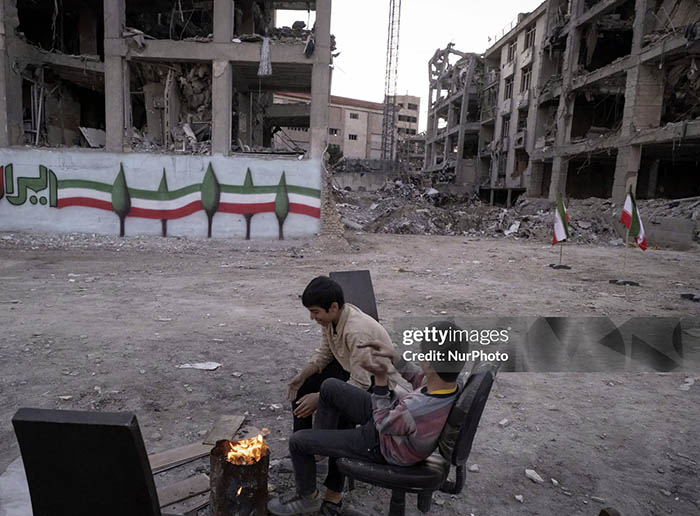
On an international level, the use of ruins serves to challenge competing narratives. In global discourse, military actions are often justified through strategic arguments that focus on security, deterrence, or geopolitical balance. Images of civilian damage complicate these arguments by introducing a moral dimension. When audiences are confronted with visible evidence of destruction in residential areas, they are more likely to question the legitimacy of the actions that caused it.
This is where the intersection between physical reality and digital amplification becomes particularly important. Search engines, social media algorithms, and online news platforms all play a role in determining which images gain visibility. By producing a steady stream of emotionally resonant content, the state increases the likelihood that its preferred narrative will dominate search results and public attention. Terms related to war damage, civilian impact, and urban destruction become associated with specific images and interpretations.
The historical context of this approach provides additional insight into its effectiveness. During the Iran–Iraq War, the Islamic Republic developed a narrative framework that emphasized sacrifice, endurance, and moral legitimacy. Physical destruction was not hidden but integrated into a broader story about national identity and resistance. Memorials, preserved battle sites, and public commemorations all contributed to a lasting cultural memory that continues to influence contemporary strategies.
April 10, 2026 | 6:19 pmMore stories
Kylie Jenner Makes Victoria’s Secret Fashion Show Debut in $50 Million Fantasy Bra
Introduction Babak Takhti is an Iranian writer, publisher and the only son of Gholamreza Takhti, the legendary Iranian freestyle wrestler … Continue reading ➝
Who Is Babak Takhti? Gholamreza Takhti’s Only Son, His Family, Career, and His Father’s Controversial Death
Introduction Babak Takhti is an Iranian writer, publisher and the only son of Gholamreza Takhti, the legendary Iranian freestyle wrestler … Continue reading ➝
Azita Hajian, Mehraveh Sharifinia and Melika Sharifinia Attend Cafe Soltan Private Screening at Megamall Cinema
Introduction The private screening of Cafe Soltan, the Iranian feature film directed by Mostafa Razagh-Karimi and produced by Morteza Razagh-Karimi, … Continue reading ➝

Bot (Bet) Movie: Hamid Nematollah’s Drama Holds Private Screening at Galleria Cinema Complex
Introduction The Iranian social drama Bot, also transliterated as Bet and associated with the English title Idol, has attracted attention … Continue reading ➝
10 Fascinating Stories About Most Famous Actresses: Behind-the-Scenes Secrets From Iconic Films and TV Shows
Introduction 1. Gohar Kheirandish in Banoo: The Makeup That Could Not Hide Her Beauty Film: Banoo (The Lady) Director: Dariush … Continue reading ➝