Inflation 2026: Tehran Residents Struggle With Soaring Food Prices and the Rising Cost of Living
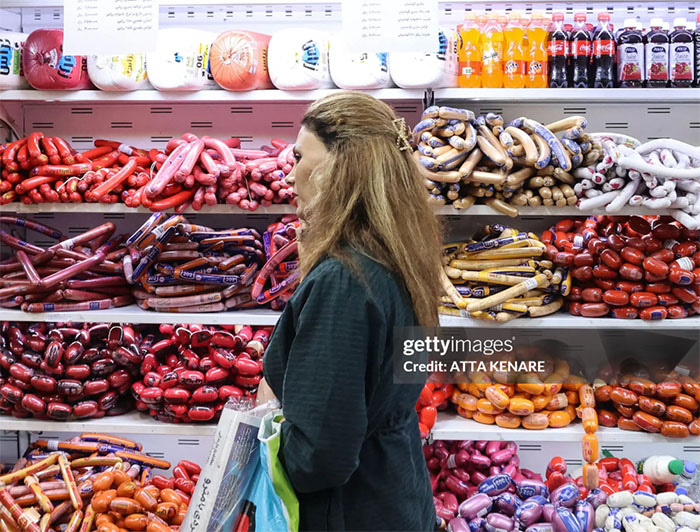
For many residents of Tehran, inflation is no longer an abstract economic statistic. It is visible in shopping bags, grocery bills, restaurant menus, household budgets and the increasingly difficult choices families make every day.
Photographs taken in southern Tehran on September 15, 2026, show people walking along shopping streets, customers buying fruit, and a shopkeeper arranging produce in a grocery store. The scenes appear ordinary at first glance. Shops are open. People are shopping. Fruit and vegetables remain on display.
But behind the everyday activity is a severe economic squeeze.
Iran is experiencing an exceptionally difficult combination of war-related disruption, international sanctions, currency weakness, rising transportation costs, shortages and already-high inflation. Recent reporting has described point-to-point inflation approaching 90 percent, while food inflation has risen even more sharply in some categories. The rial has also experienced extreme depreciation, making it increasingly difficult for households and businesses to plan their spending.
The crisis has been developing for years, but the war that began in February 2026 has added another layer of pressure. Disruption around the Strait of Hormuz has affected shipping and energy markets, while restrictions on Iranian exports and difficulties moving goods have increased the cost of imports and domestic distribution.
For ordinary Iranians, the result is a familiar but increasingly severe problem: prices rise faster than incomes.
Tehran Inflation: When Everyday Shopping Becomes a Financial Calculation
Inflation changes the meaning of an ordinary trip to the market.
A household that once purchased a familiar basket of food can no longer assume that the same amount of money will buy the same products a month later. Consumers increasingly have to compare prices, reduce quantities, substitute cheaper products or postpone purchases.
This is particularly painful for food because food cannot simply be eliminated from a household budget.
Families can delay buying a new appliance. They can postpone a holiday. They can repair an old phone rather than replace it.
Food is different.
Bread, rice, meat, dairy products, vegetables, fruit and cooking oil have to be purchased continuously. When those prices rise rapidly, households have limited options.
Recent reporting has documented particularly sharp increases in food prices in Iran. Al Jazeera reported in August that the inflation index for fruits and nuts had reached 115.4 percent in the final month of the Iranian calendar year covered by its report. Other reporting has placed food inflation even higher during the summer.
That means the headline inflation rate does not necessarily capture what families experience when they go grocery shopping.
For a household spending a large proportion of its income on food, food inflation matters much more than an economy-wide average.
September 17, 2026 | 12:39 pm