Golshifteh Farahani at Marjane Satrapi Funeral in Paris: Artists Remember the Legacy of Persepolis Creator

The Global Impact of Persepolis and Marjane Satrapi’s Artistic Revolution
The influence of Marjane Satrapi’s Persepolis reached far beyond the world of graphic novels. The work became a cultural reference point for discussions about history, identity, migration, and the experiences of people who find themselves between different worlds. Its success demonstrated that a deeply personal story could become a universal message understood by readers and audiences across continents.
When Persepolis was first introduced to international audiences, many readers were surprised by how effectively a graphic novel could communicate complex historical and emotional experiences. Satrapi used the visual language of comics not as a limitation but as a powerful artistic tool. Her drawings created a direct connection between the reader and the emotions of her characters.
The simplicity of her illustrations contrasted with the complexity of the subjects she explored. Childhood memories, political changes, family relationships, and questions about freedom were presented through images that appeared simple but carried deep meaning.
This unique approach helped transform perceptions of graphic storytelling. Satrapi proved that comics could be a serious literary form capable of exploring difficult realities. Her work influenced many creators who later used graphic novels to discuss personal histories, social issues, and cultural experiences.
The international success of Persepolis also created greater interest in Iranian voices in global literature and cinema. Many people who knew little about everyday life in Iran discovered a different perspective through Satrapi’s eyes.
Her storytelling challenged assumptions and encouraged audiences to understand that countries and cultures are made up of individuals with unique experiences. She presented Iran not as a single image but as a complex society filled with different generations, personalities, and viewpoints.
The animated adaptation of Persepolis expanded this influence. Through cinema, Satrapi’s story reached a wider audience and introduced her artistic vision to viewers who may not have been familiar with graphic novels.
The film maintained the emotional strength of the original work while adding new dimensions through animation, voice performances, and cinematic storytelling. It became an example of how animation could address serious and mature subjects.
June 19, 2026 | 8:43 pm
More stories

Who Is Babak Takhti? Gholamreza Takhti’s Only Son, His Family, Career, and His Father’s Controversial Death
Introduction Babak Takhti is an Iranian writer, publisher and the only son of Gholamreza Takhti, the legendary Iranian freestyle wrestler … Continue reading ➝
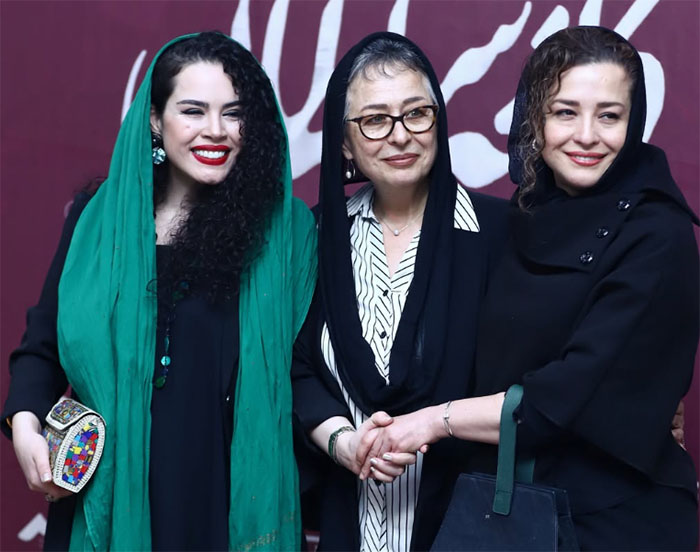
Azita Hajian, Mehraveh Sharifinia and Melika Sharifinia Attend Cafe Soltan Private Screening at Megamall Cinema
Introduction The private screening of Cafe Soltan, the Iranian feature film directed by Mostafa Razagh-Karimi and produced by Morteza Razagh-Karimi, … Continue reading ➝

Bot (Bet) Movie: Hamid Nematollah’s Drama Holds Private Screening at Galleria Cinema Complex
Introduction The Iranian social drama Bot, also transliterated as Bet and associated with the English title Idol, has attracted attention … Continue reading ➝
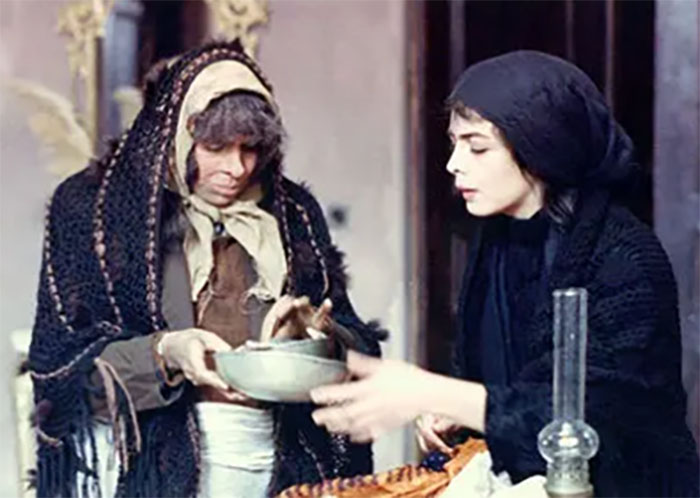
10 Fascinating Stories About Most Famous Actresses: Behind-the-Scenes Secrets From Iconic Films and TV Shows
Introduction 1. Gohar Kheirandish in Banoo: The Makeup That Could Not Hide Her Beauty Film: Banoo (The Lady) Director: Dariush … Continue reading ➝

9 Famous Celebrity Love Stories That Captivated the World
Introduction 1. Googoosh and Dariush: The Rumored Romance Between Two Iranian Music Legends Few names are as recognizable in Iranian … Continue reading ➝