In-Depth Review and Analysis of Hatef Alimardani’s “Kajpileh”: A Critical Perspective on Modern Cinema and Social Media Influence
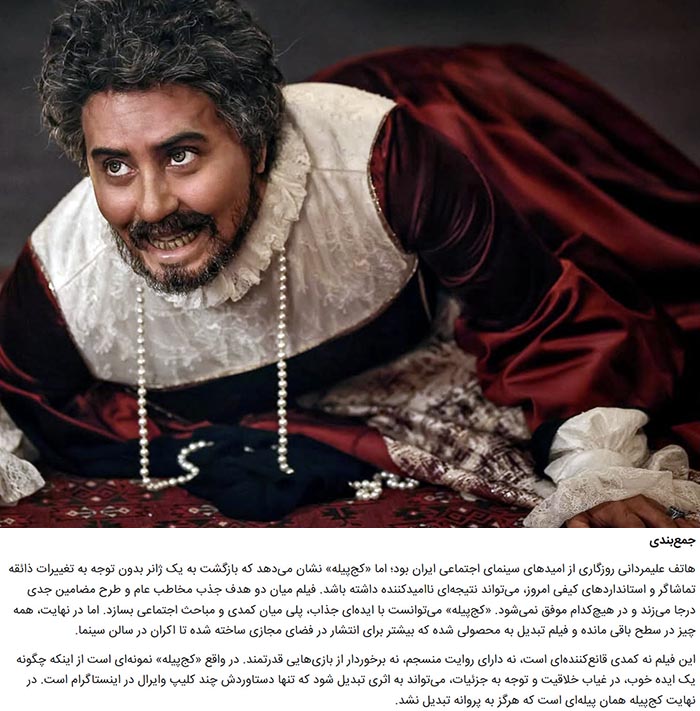
Lack of Character Development
The script itself did little to develop her character beyond superficial comedic situations. As a result, her performance lacked the nuanced emotional layers that she is known for. Instead of exploring the internal conflict or social critique that could have been embedded in the story, her role was reduced to comic relief and visual spectacle.
Contrast with Previous Works
Compared to her previous roles where she skillfully portrayed women navigating societal pressures, her role in “Kajpileh” feels hollow. Her genuine talent is obscured behind heavy makeup, hurried scenes, and a script that offers little room for emotional exploration.
The Impact on Her Career and Artistic Legacy
While her performance in “Kajpileh” has been criticized, it’s important to contextualize this within the broader landscape of Iranian cinema. Many artists, especially when working within constrained environments or commercial pressures, face challenges that can limit their artistic expression.
However, this film’s failure to utilize her talent effectively raises concerns about the types of roles being offered to accomplished actresses and the creative directions filmmakers are taking.
For Elnaz Shakerdoost, this role might be seen as a misstep or a missed opportunity to showcase her full range. Nevertheless, her previous body of work remains influential, and she continues to be a significant figure in Iranian arts and cinema.
November 21, 2025 | 11:18 pm