In-Depth Review and Analysis of Hatef Alimardani’s “Kajpileh”: A Critical Perspective on Modern Cinema and Social Media Influence
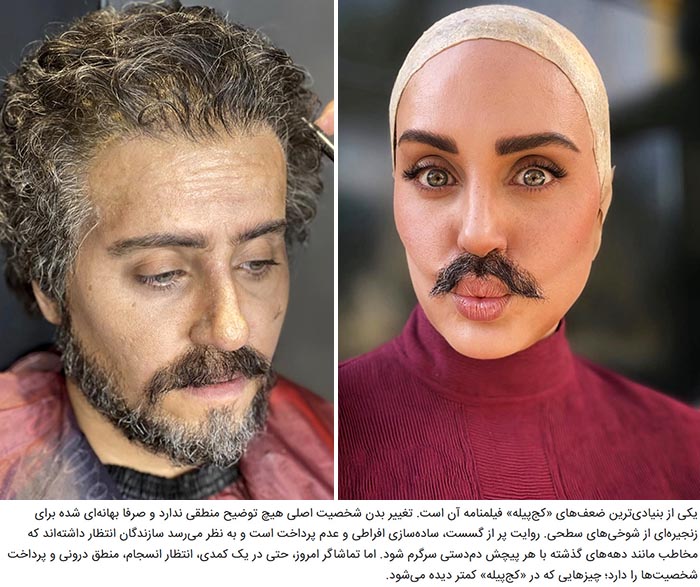
Critical Analysis of “Kajpileh”: Strengths and Weaknesses
1. Cinematic Identity and Direction
Hatef Alimardani’s return with “Kajpileh” is considered a wandering and contradictory work. While he previously demonstrated a sharp social vision, this film appears to lack a clear cinematic identity, oscillating between comedy, social critique, and social media marketing.
Critics argue that the film’s direction is erratic, with a narrative that feels rushed and superficial. Instead of addressing social issues with depth, it becomes a vehicle for viral clips and Instagram reels, sacrificing coherence for fleeting popularity.
2. Performances and Actor Portrayals
Elnaz Shakerdoost, known for her powerful performances in films like “TT” and “Highway Deer”, is notably underutilized. Heavy makeup, erratic direction, and superficial characterization make her performance feel disconnected from her previous work.
In contrast, Naimeh Nezamdoost offers some genuinely funny moments, standing out as the film’s bright spot. Other actors, including Soroush Sehat, are hampered by a weak script and lack of character development, resulting in performances that appear forced or superficial.
3. Makeup and Special Effects
A significant aspect of the film involves Elnaz Shakerdoost’s male makeup, which was intended to propel the narrative but ends up being distracting and artificial. The makeup’s poor quality and the sound design further diminish the film’s immersive experience, breaking the suspension of disbelief and emphasizing the artificiality of the production.
4. Humor and Comedy Style
The comedy in “Kajpileh” relies heavily on sexual jokes, stereotypes, and recycled humor—a hallmark of low-quality Iranian comedies. This approach demonstrates a lack of originality and courage, turning into a series of predictable and tasteless scenes that fail to critique or explore social issues meaningfully.
5. Script and Narrative Coherence
One of the most critical flaws is the weak script, which features a lack of internal logic, character development, and narrative coherence. The body switch lacks explanation, and the story is full of abrupt transitions and oversimplified plot points, reflecting a script that expects audiences to accept superficial twists without question.
November 21, 2025 | 11:18 pm