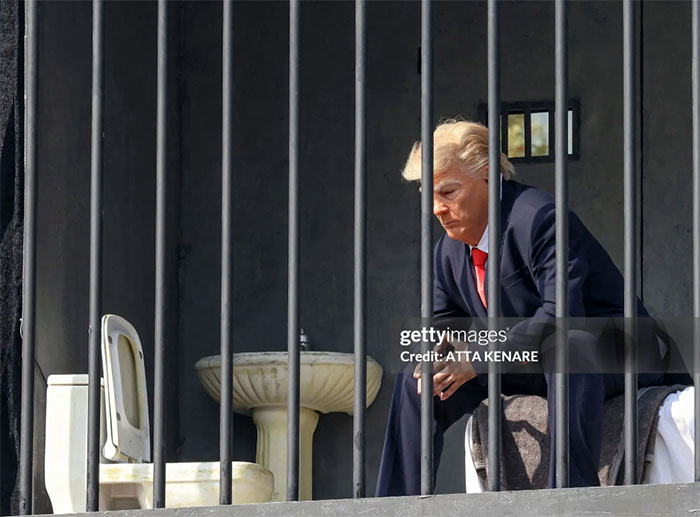
Donald Trump Mask in Tehran: Actor Appears in Mock Prison Cell at Tajrish Square
Political symbolism and international rivalry
Governments, political movements and campaign organizations have long used images of foreign leaders to communicate their positions to domestic audiences.
A caricature can reduce a complicated dispute to a single recognizable figure. The image of a leader can represent a broader government, a foreign policy, a military campaign or a set of political decisions.
This is one reason that political imagery frequently focuses on prominent leaders. Their faces are widely recognized, and their public statements and actions are often associated with the direction of national policy.
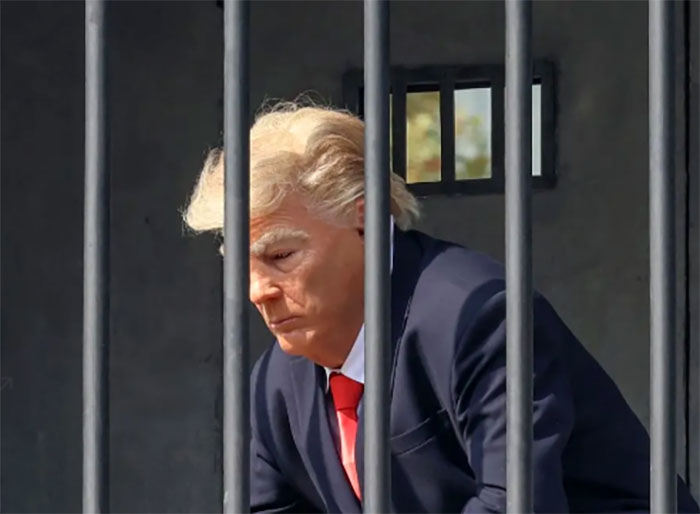
In the Tehran installation, the use of Trump’s likeness places the US president at the center of the visual narrative.
The prison setting then provides an interpretation of that figure. It implies confinement and reversal of power, creating a stark contrast between the authority associated with the presidency and the restricted position represented by the cell.
The symbolism is immediately legible, although different viewers may interpret its implications differently.
Political art as a form of messaging
Political art does not necessarily seek to provide a balanced account of a dispute. Its purpose may be to persuade, criticize, provoke, entertain or reinforce a particular point of view.
A staged image can therefore communicate a position through exaggeration rather than detailed argument.
The mock prison cell is an example of this approach. The visual is not a literal representation of international relations or a record of a legal proceeding. It is a symbolic scenario designed around a recognizable political character.
Its effect depends partly on the audience’s familiarity with Donald Trump and its understanding of the political relationship between Iran and the United States.
For some viewers, the image may function as a humorous political caricature. Others may regard it as an expression of hostility or a form of political propaganda. Still others may focus primarily on its unusual construction and theatrical presentation.
Those interpretations are not mutually exclusive. Political imagery can be visually striking, entertaining and ideologically motivated at the same time.
October 21, 2026 | 2:15 pm