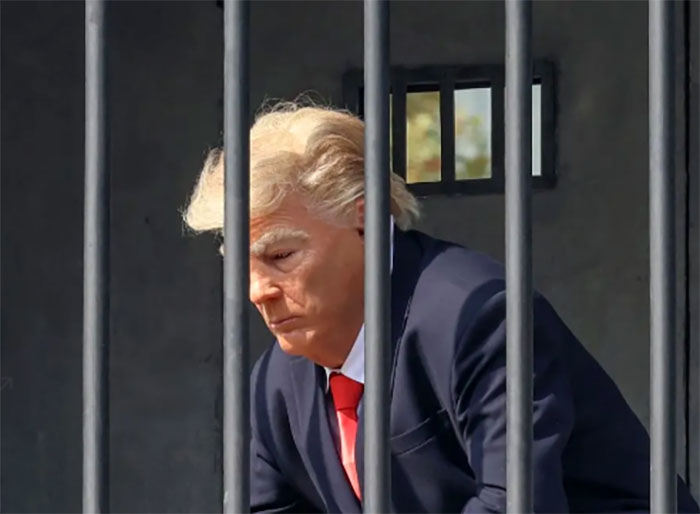
Donald Trump Mask in Tehran: Actor Appears in Mock Prison Cell at Tajrish Square
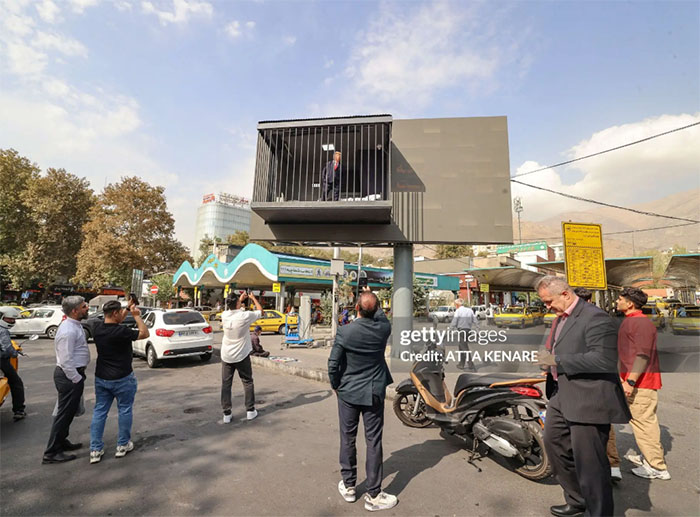
Tehran as a setting for public political imagery
Public billboards can play a prominent role in communicating political messages in large cities. Their scale and visibility make them useful for conveying slogans, symbolic images and official narratives.
In Tehran, billboards have been used to depict political leaders, military themes and representations of the country’s confrontation with foreign adversaries. Reporting published in October 2026 described a wider campaign of anti-Trump imagery, including designs involving the Strait of Hormuz and American military hardware.
The Tajrish Square installation uses a different technique. Instead of relying exclusively on a large graphic, it brings a performer into the public display.
This difference is significant because it shifts the emphasis from a static image to an event that people can watch and record.
The result is a photograph that documents both a political representation and an encounter between that representation and the surrounding public.
Iran-US Relations: The Political Context Behind the Trump Billboard
The installation appeared against the backdrop of strained relations between Iran and the United States.
For decades, the relationship between Tehran and Washington has been shaped by disputes involving regional security, economic sanctions, Iran’s nuclear program, military activity and competing geopolitical interests. The intensity and specific features of those disputes have changed over time, but mutual distrust has remained an important element of the relationship.
In 2026, news coverage of Tehran’s public billboards has highlighted how political communication can reflect and reinforce the narratives surrounding the confrontation.
The Trump mock prison cell provides a compact visual expression of that atmosphere. The president is represented not as a diplomatic partner or a head of state exercising authority, but as a person confined behind bars.
That image can communicate opposition and defiance without explaining the full history of the bilateral relationship.
October 21, 2026 | 2:15 pm