Donald Trump Mask in Tehran: Actor Appears in Mock Prison Cell at Tajrish Square
Why a physical installation attracts attention
A conventional billboard communicates primarily through its printed or digital image. A physical installation can create an additional sense of depth and immediacy.
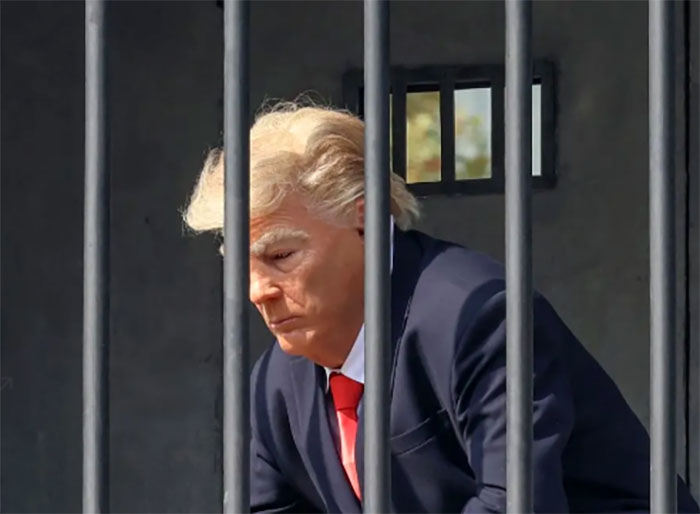
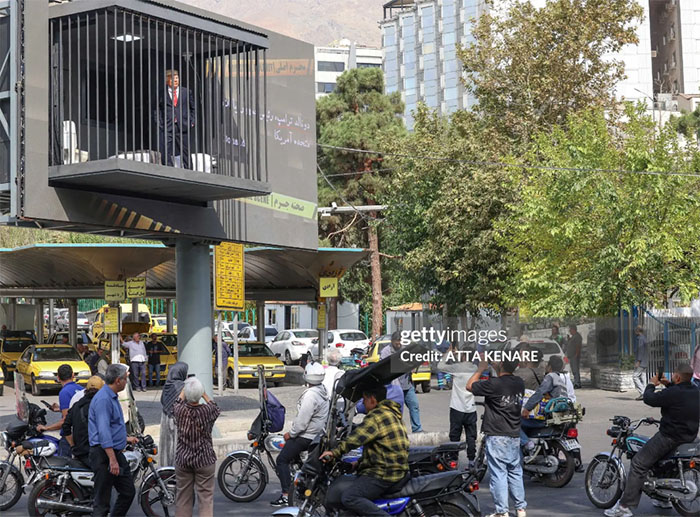
The viewer sees a structure that resembles a real enclosure, with a performer occupying the space behind its bars. The visual effect may encourage pedestrians to stop, look more closely and photograph the scene.
This is particularly relevant in a busy urban location, where people frequently encounter advertising, traffic, storefronts and other competing visual information.
A recognizable face combined with an unexpected setting can interrupt the ordinary rhythm of the street. A president portrayed as a prisoner is an unusual enough image to attract attention without needing a long explanation.
The Tajrish Square photographs illustrate this interaction between public space and political performance. Pedestrians are not simply passing a billboard; some are stopping to record what they see.
The role of the Trump mask
Masks have a long history in theater, comedy, protest and political performance. They allow a performer to represent another person while making the act of impersonation visible.
A mask depicting Donald Trump works through recognition. His face becomes a visual shorthand for the president himself, allowing the performer to embody a political figure without being mistaken for the actual person.
The mask also creates a distinction between the real individual and the character being portrayed. The actor is not Donald Trump, and the staged prison does not represent an actual legal event involving him.
That distinction makes the installation a form of theatrical representation rather than documentary evidence of an arrest or imprisonment.
The use of a physical mask may also make the performance easier to recognize from a distance. In a street environment, a clearly identifiable face can communicate faster than detailed text.
From a billboard to a public performance
The installation combines elements of sculpture, theater, political communication and street photography.
The cell creates the physical environment. The performer gives it movement and personality. The billboard provides visibility, while the surrounding square supplies an audience.
This combination helps explain why the scene is visually different from a conventional political poster. The viewer encounters a person occupying a three-dimensional structure rather than merely seeing a printed representation of a political figure.
Photographs then extend the installation’s reach beyond Tehran. Once images circulate through news websites, photo agencies and social media, the performance can reach audiences who have never visited Tajrish Square.
The original display exists in a specific location and moment. Its photographs can continue to attract attention after viewers have moved on and the installation itself has changed or disappeared.
October 21, 2026 | 2:15 pm