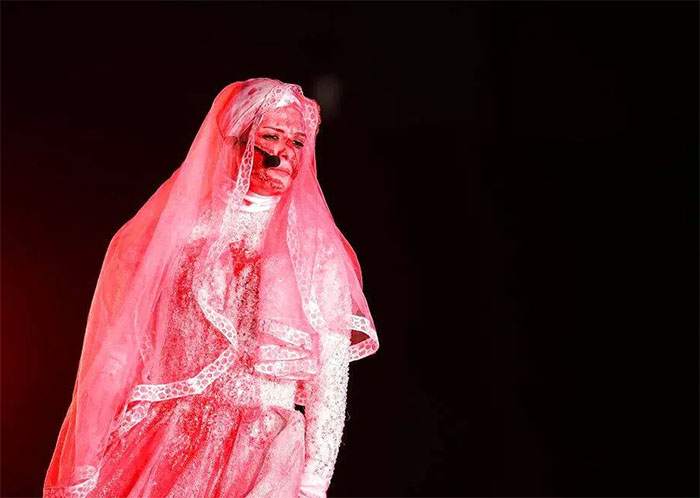
An Unusual Wedding Ceremony in Tehran Becomes a Memorial for the Victims of the Kohestak, Sirik Tragedy
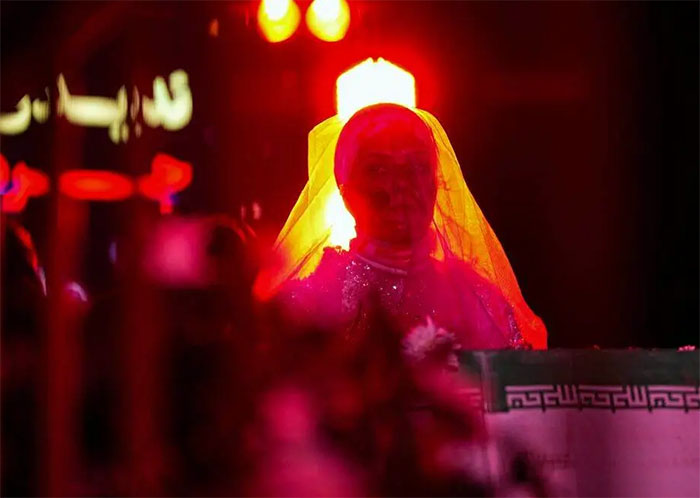
Why Photographs Matter in Reporting on Tragedy
Photographs are an important part of contemporary news reporting because they allow audiences to see places, objects and events that they may never encounter directly.
In coverage of the Tehran wedding display, photographs can show the semi-trailer, the wedding-themed arrangement, the surrounding street environment and the slogan used in the installation.
These details help readers understand what makes the event unusual.
Photography can also establish a visual connection between a public display and a wider news story. A reader who initially discovers the image through a search engine or social media post may then seek more information about the Kohestak tragedy.
However, visual reporting also carries responsibilities.
Images of civilian suffering should be presented with care, especially when they involve children, grieving families or people who have experienced serious injuries. Photographs should not be used to imply details that cannot be verified from the image itself.
A photograph of a wedding-themed truck in Tehran can establish that such a display was presented, provided the image is authentic and correctly captioned. It cannot independently prove every detail about the event’s organizers, motivations or connection to the original incident.
Similarly, photographs from the aftermath of the Kohestak strike can document visible destruction, but additional reporting is needed to establish the sequence of events and the circumstances surrounding the attack.
The most effective photo journalism combines compelling imagery with accurate captions and sufficient context.
For this event, the essential information includes the location in Tehran, the unconventional semi-trailer setting, the wedding-themed presentation, the slogan and the reported connection to the victims of the Kohestak tragedy.
Providing this information helps readers understand why the images matter without overstating what they show.
How an Unusual Street Display Becomes an Online News Story
A distinctive public installation can attract attention both in the physical environment and online.
The Tehran wedding display has several characteristics that make it suitable for visual news coverage: an unexpected location, a recognizable theme, a short slogan and a reported connection to a significant event.
When photographs are published online, their presentation can determine whether readers understand the story immediately.
A clear headline should identify the unusual wedding ceremony in Tehran. The opening paragraph should explain that the display was staged on a semi-trailer truck and was reportedly intended as a memorial for the victims of the Kohestak incident.
The following paragraphs should provide the necessary background, explain what is known about the original tragedy and distinguish verified reporting from unconfirmed claims.
This structure benefits readers because it answers the basic questions early: what happened, where it happened, why the display is unusual and what event it commemorates.
It also supports search engine optimization by naturally including relevant terms such as “Tehran wedding ceremony,” “wedding memorial in Iran,” “Kohestak Sirik tragedy” and “Iran news.”
These phrases should appear where they are genuinely useful rather than being repeated in every paragraph.
For a photo gallery, individual captions can identify visible features without duplicating the entire article. One caption might describe the wedding-themed display on the semi-trailer, while another could explain the significance of the slogan.
If the original photographs show additional details, such as flowers, decorative elements or the surrounding street, those features can be described directly. Details not visible in the photographs should not be invented to make the story more dramatic.
A useful article should also include a date where it is known, a clear location and appropriate source links.
These elements make the report more informative for readers who discover it through Google Search, Google News, image searches or social media.
October 20, 2026 | 6:14 pm