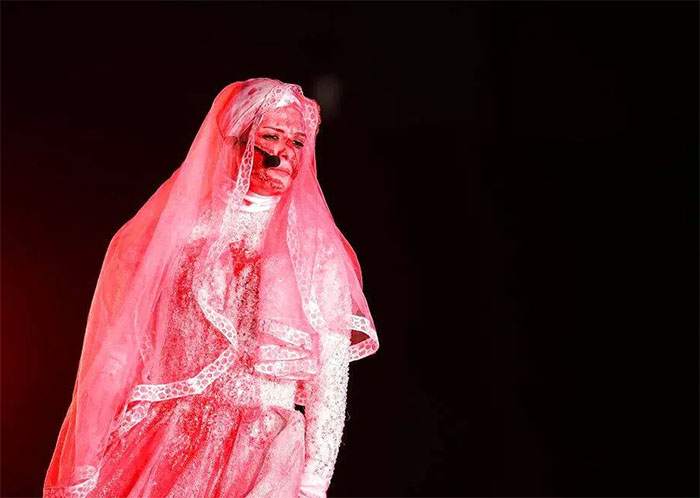
An Unusual Wedding Ceremony in Tehran Becomes a Memorial for the Victims of the Kohestak, Sirik Tragedy
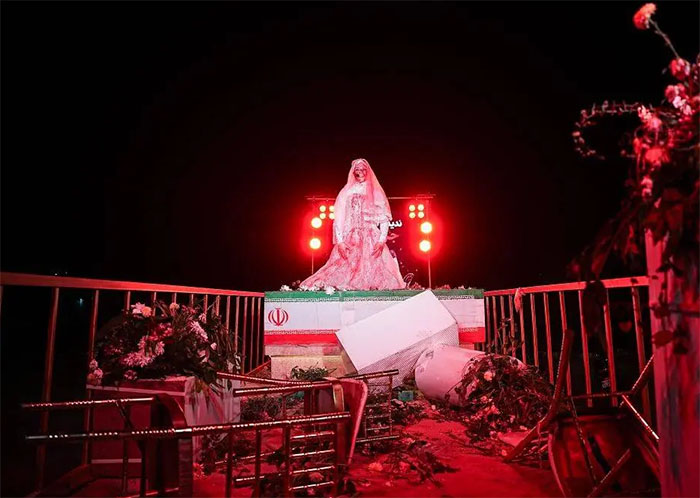
A Memorial That Connects Tehran With Southern Iran
The distance between Tehran and Kohestak highlights an important aspect of public remembrance: a tragedy that occurs in one community can become a subject of attention elsewhere.
Kohestak is located in southern Iran, in Hormozgan Province. Tehran, the country’s capital, is far to the north. The two locations have different geographic settings and different roles in the country’s everyday life.
Yet a public installation in Tehran can direct attention toward an incident in a smaller coastal community.
The reported memorial purpose of the wedding display establishes that connection. The installation uses wedding imagery, a recognizable symbol of family celebration, to refer to the victims of an incident that occurred during a wedding gathering.
In this sense, the display is not only about the physical setting of a truck or the unusual presentation of decorations. It is also about how public memory can travel through images and messages.
Photographs allow people to encounter the display even if they never pass the truck in person. News coverage provides the background needed to understand the reference. Online discussion can then bring the event to audiences in other parts of Iran and beyond.
The extent of the response cannot be established from the supplied description alone. It would be inaccurate to claim that the display has become a nationwide movement or attracted a particular number of visitors without supporting evidence.
What can be said is that the installation offers an unusual visual way to connect a Tehran street scene with a tragedy reported in southern Iran.
The contrast between celebration and mourning gives the display its central theme.
The Human Cost Behind the Headlines
News reports often present tragedies through casualty figures, official statements and descriptions of damage. These details are essential for establishing what happened, but they do not fully communicate the human consequences of an incident.
A wedding gathering consists of individual people with families, friendships and personal histories. The loss of a guest affects more than the immediate circumstances of the attack. It changes the lives of relatives and friends who expected to share a celebration.
Those who survive may also face physical injuries, emotional distress and the difficult process of rebuilding ordinary routines after a traumatic event.
For a community, the effects can persist long after the immediate emergency has ended. Families may need medical assistance, practical support and time to grieve. Damaged homes may require repairs, and public discussions may continue about accountability and civilian protection.
The Tehran display cannot communicate every part of that experience, nor should a single installation be expected to do so.
Its reported memorial purpose instead draws attention to the victims and reminds viewers that the event being remembered involved real people rather than an abstract headline.
The use of wedding imagery is particularly relevant because it refers to the occasion those people had gathered to celebrate.
In a conventional wedding photograph, decorations and carefully prepared surroundings preserve a happy moment. In a memorial display, similar imagery can serve as a reminder of the celebration that was interrupted.
This contrast can be emotionally powerful without requiring exaggerated language.
A responsible report should allow the documented facts and the visible details of the installation to carry the story. It should avoid inventing personal experiences, attributing feelings to unidentified people or describing reactions that have not been independently documented.
The aim is to inform readers while treating the people affected by the tragedy with dignity.
October 20, 2026 | 6:14 pm