The Repression in Tehran: An In-Depth Analysis of Human Rights Violations and Social Unrest
1. Political Repression in Tehran
Suppression of Political Opposition
Since the Islamic Revolution of 1979, Iran’s government has maintained an authoritarian regime characterized by strict control over political expression. Opposition parties, activists, and dissenters face continuous persecution. Political figures who challenge the regime are routinely imprisoned, exiled, or silenced through intimidation and violence.
The regime’s security apparatus, including the Ministry of Intelligence, IRGC, and Basij militia, actively suppresses any political opposition. Elections are often manipulated, and opposition candidates face disqualification or intimidation. The lack of genuine political freedom sustains a climate of fear, discouraging organized dissent.
Crackdown on Civil Unrest and Protests
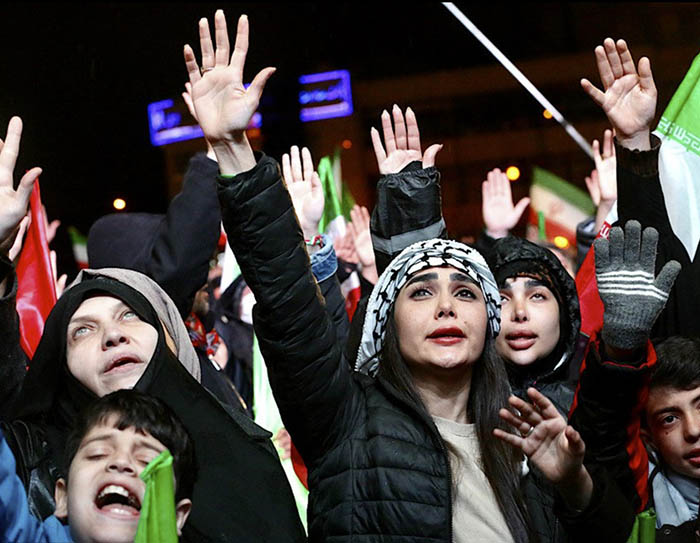
Iranian society has experienced numerous protests over the years—initially driven by economic hardship, inflation, and unemployment, and later propelled by demands for greater political freedoms. The 2009 Green Movement, the 2019 fuel protests, and the 2022 Mahsa Amini protests are some of the prominent examples.
The government’s response to protests is often brutal. Security forces deploy live ammunition, tear gas, and water cannons to disperse crowds. Mass arrests and detentions are common, with many protesters facing torture and ill-treatment. The authorities label protesters as “enemies of the state” and use legal and extralegal measures to suppress activism.
Role of Security Forces (Basij, IRGC)
Iran’s security forces are central to the repression machinery. The Basij militia, a volunteer paramilitary force, is frequently used to quell dissent, conduct surveillance, and intimidate citizens. The IRGC, Iran’s elite military and ideological force, plays a crucial role in maintaining internal stability through repression.
These forces operate with impunity, often disregarding human rights standards. They are responsible for numerous reports of torture, forced confessions, and extrajudicial killings. Their presence in public spaces and detention centers makes Tehran’s repression apparatus formidable.
Censorship and Media Control
The regime tightly controls all means of communication in Tehran. The press is state-controlled, and independent journalism faces constant threats. Journalists, bloggers, and social media users who criticize the government are subjected to harassment, arrest, and violence.
Internet censorship is pervasive. Platforms like Facebook, Twitter, and Telegram are frequently blocked, while the government employs sophisticated surveillance tools to monitor online activity. This digital repression hampers free expression and prevents the dissemination of uncensored information.
Arbitrary Detention and Human Rights Violations
Human rights organizations report widespread arbitrary detention of activists, journalists, women’s rights defenders, and ethnic minorities. Detainees often face torture, sleep deprivation, and forced confessions. Many are held without charge or trial, violating international legal standards.
High-profile cases include the imprisonment of dual nationals and prominent human rights advocates. These policies aim to instill fear and discourage activism, consolidating the regime’s grip on power.
January 26, 2026 | 3:02 pm