Abbas Araghchi Controversy: Questions Over Religious Image, Hijab Rules and the UN General Assembly
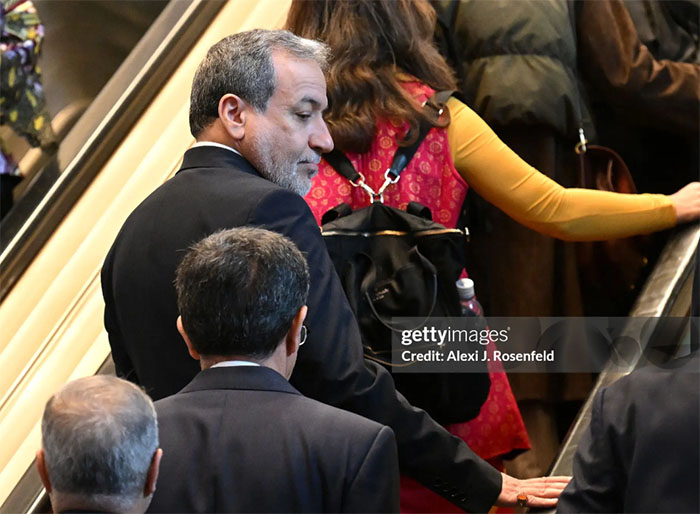
Why the Photograph Has Attracted Attention
The controversy surrounding the photograph is not simply about a man standing next to a woman.
For critics of Iran’s Islamic Republic, images involving senior government officials can become symbols of what they perceive as a contradiction between the government’s domestic rules and the behavior of its representatives abroad.
Iran’s political system officially presents itself as an Islamic state, and the government has historically imposed rules concerning women’s dress and public behavior.
The hijab has therefore not merely been a matter of personal religious expression in the Iranian political system.
It has also been associated with state policy and public regulation.
Consequently, photographs showing Iranian officials interacting with women who do not conform to Iran’s domestic dress expectations can trigger a particular kind of political reaction.
The argument made by critics is straightforward:
If Iranian authorities expect women in Iran to observe compulsory hijab standards, why should representatives of the same government appear publicly in settings where women may dress differently?
That question is particularly prominent when the official involved is a senior figure such as the foreign minister.
But there is another side to the issue.
Diplomats operate in foreign countries under different legal and social systems. An Iranian government representative visiting the United States is not operating inside Iran’s domestic legal environment.
The United Nations headquarters in New York is also an international diplomatic environment involving representatives from virtually every part of the world.
Iranian officials regularly meet men and women from other governments, international organizations, media organizations and civil society groups.
Indeed, publicly documented photographs from Araghchi’s September 2026 trip show him meeting international officials, including European Union foreign-policy chief Kaja Kallas. A photograph dated September 22 shows Araghchi meeting Kallas during the UN General Assembly.
That means the broader question cannot simply be reduced to whether Iranian officials are permitted to interact with women.
They clearly do so as part of diplomacy.
The more specific question is what standards Iran expects its officials to follow in different contexts, and how those standards are interpreted by critics and supporters.
September 25, 2026 | 10:20 pm