The One Billion Toman Kurmanji Dress of Khorasan: Why Is This Traditional Kurdish Clothing So Expensive?
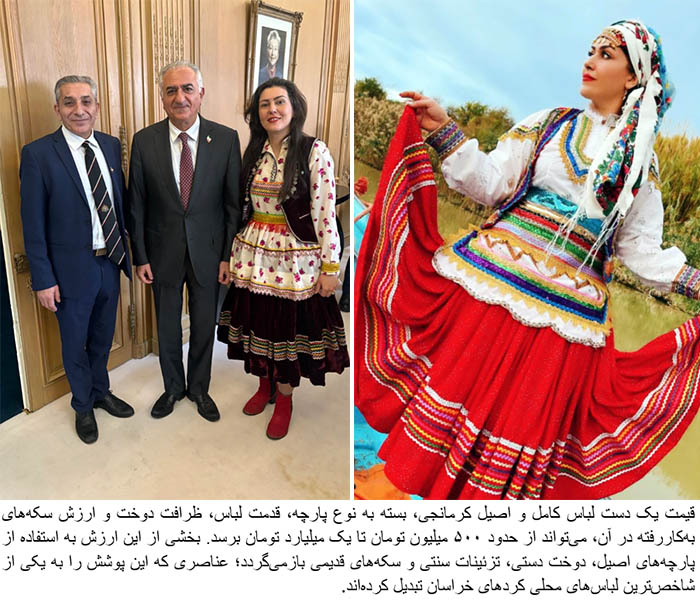
Traditional clothing is more than a collection of fabrics, colors, ornaments, and sewing techniques. In many parts of Iran, traditional dress carries the history, identity, memories, and cultural heritage of the communities that created and preserved it. Among the most distinctive examples are the traditional clothes of the Kurmanji Kurds of Khorasan, whose elaborate women’s garments have attracted increasing attention because of their extraordinary colors, intricate handwork, traditional ornaments, and the large number of old coins incorporated into some authentic examples.
In recent years, the value of an authentic and complete Kurmanji traditional dress from Khorasan has become a subject of interest among people searching for Kurdish traditional clothing, Kurmanji clothing, Khorasan Kurdish dress, traditional Kurdish women’s clothing, and Iranian ethnic costumes. Depending on the quality and age of the fabric, the condition of the garment, the complexity of the embroidery and hand-stitching, the number and age of the coins, the rarity of individual pieces, and the historical background of the clothing, a complete authentic garment can reportedly be valued at approximately 500 million tomans to one billion tomans or more.
At first glance, such a price may seem extraordinary for a traditional dress. However, an authentic antique or heritage Kurmanji garment is fundamentally different from an ordinary modern piece of clothing. Its value is not determined simply by the amount of fabric used or by the cost of producing a contemporary dress. Instead, several layers of cultural, historical, artistic, material, and collectible value can exist within a single garment.
An old Kurmanji dress may contain expensive velvet, silk, cashmere, wool, traditional fabrics, hand-embroidered decorations, carefully preserved old coins, handmade accessories, and components that were produced using techniques that are increasingly difficult to reproduce. Some garments have also been preserved within families for generations. In such cases, the dress can function almost like a textile archive: the fabric records one period, the coins another, the embroidery reflects local artistic traditions, and the way the garment was assembled provides clues about the community that wore it.
This is why the question “Why is a Kurmanji dress worth one billion tomans?” cannot be answered simply by saying that the garment is expensive because it contains many coins.
The real answer is much broader.
The price reflects the combination of authenticity, age, craftsmanship, materials, rarity, cultural significance, preservation, traditional design, and the historical value of individual components.
August 26, 2026 | 6:26 pm