The Mysterious Resemblance of Syria’s Foreign Minister to Abu Bakr al-Baghdadi
The Recent Surge of Speculation: The Syrian Foreign Minister and Abu Bakr al-Baghdadi
The Emergence of Asad al-Shaibani
In December 2024, Syria appointed a relatively obscure diplomat, Asad Hassan al-Shaibani, as the new Syrian Foreign Minister. Notably, he was not well-known in Syrian political circles before his appointment. His background was shrouded in mystery, with limited public information available about his career, origins, or affiliations.
The Facial Resemblance Sparks Global Debate
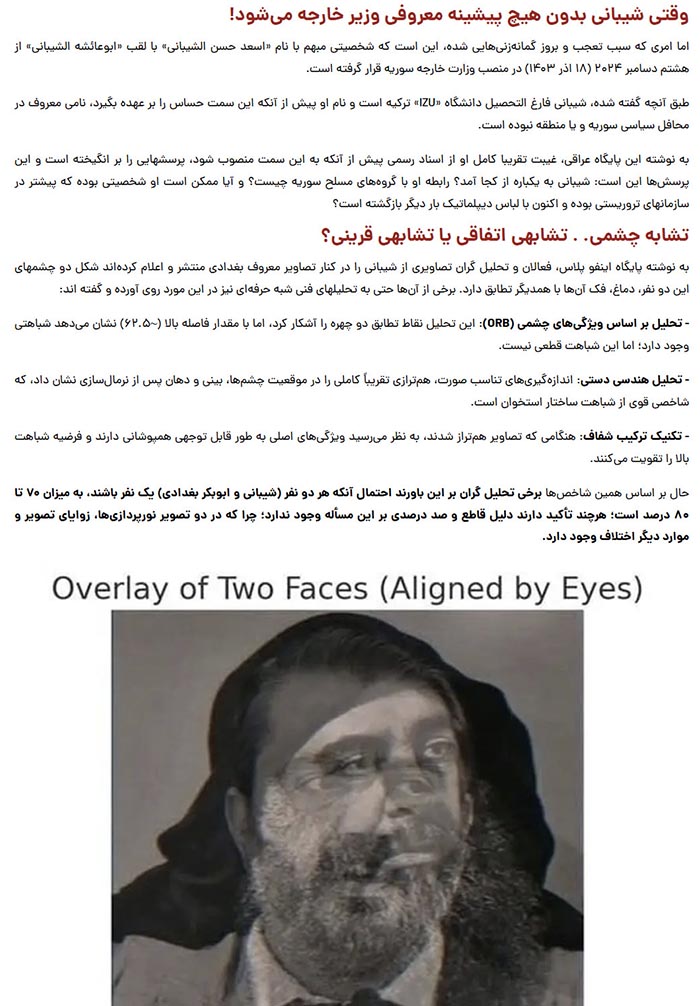
Following his appointment, social media and investigative analysts released images comparing Shaibani to Abu Bakr al-Baghdadi. The similarities in facial features—particularly the eyes, nose, jawline, and bone structure—led to widespread speculation. Digital analysis tools, facial recognition software, and geometric assessments suggested a high probability that the two might be the same person.
Analyzing the Evidence: Resemblance or Deception?
Facial Recognition and Analytical Techniques
- Facial Feature Analysis (ORB & Geometric): Experts utilized facial recognition algorithms, comparing key facial landmarks such as eye spacing, nose width, jawline, and cheekbone structure. The results indicated a significant overlap, with some analyses suggesting up to 80% similarity.
- Image Blending & Overlay Techniques: When images of Shaibani and Baghdadi were aligned and blended, core features appeared to overlap considerably, raising suspicions about their potential identity.
- Lighting and Angle Variations: Critics argue that differences in lighting, angle, and image quality could distort facial features, making resemblance appear more significant than it actually is.
The Probability of Identity: Experts’ Opinions
Some analysts estimate that the likelihood that Shaibani and Baghdadi are the same individual is between 70-80%. However, many caution that without conclusive biometric or DNA evidence, such claims remain speculative.
The Role of Disinformation and Psychological Warfare
Counterarguments suggest that these rumors could be fabricated or amplified as part of disinformation campaigns designed to destabilize Syria or distract from ongoing regional conflicts.