The Complete History of the Lion and Sun Symbol: From Ancient to Modern Flags
1.1 The Significance of the Lion in Iranian Culture
The lion has been a powerful emblem in Iranian civilization since prehistoric times. Archaeological discoveries, such as the Shahdad Banner, a 6,000-year-old artifact excavated from Kerman, depict a prominent lion motif at its center, indicating the lion’s importance in early Iranian art and symbolism.
In ancient Iranian mythology and religious thought, the lion represented strength, protection, sovereignty, and divine power. The lion was often depicted as a guardian figure in religious rituals and royal iconography. It symbolized the divine authority of kings and was believed to embody the qualities of bravery, justice, and royal dignity.
The lion’s composite forms, such as winged lions, further emphasized its divine and extraterrestrial associations. These winged lions appeared in Persian art, especially in the Achaemenid and Sassanian periods, symbolizing earthly power combined with celestial authority.
1.2 The Significance of the Sun in Ancient Iranian Thought
The sun has held a central place in Iranian culture for millennia. It was viewed not only as a natural celestial body but also as a divine force embodying light, justice, fertility, and cosmic order.
In Zoroastrianism, Iran’s ancient religion, the sun is a manifestation of Ahura Mazda’s divine radiance, representing truth and righteousness. The concept of “Farrah,” meaning divine radiance or glory, is often associated with the sun, symbolizing divine favor and legitimacy.
Ancient Iranian narratives often depict the sun as a symbol of cosmic sovereignty, aligning with the idea of divine kingship and the universal order called Asha.
1.3 The Intersection of Sun and Lion in Ancient Art
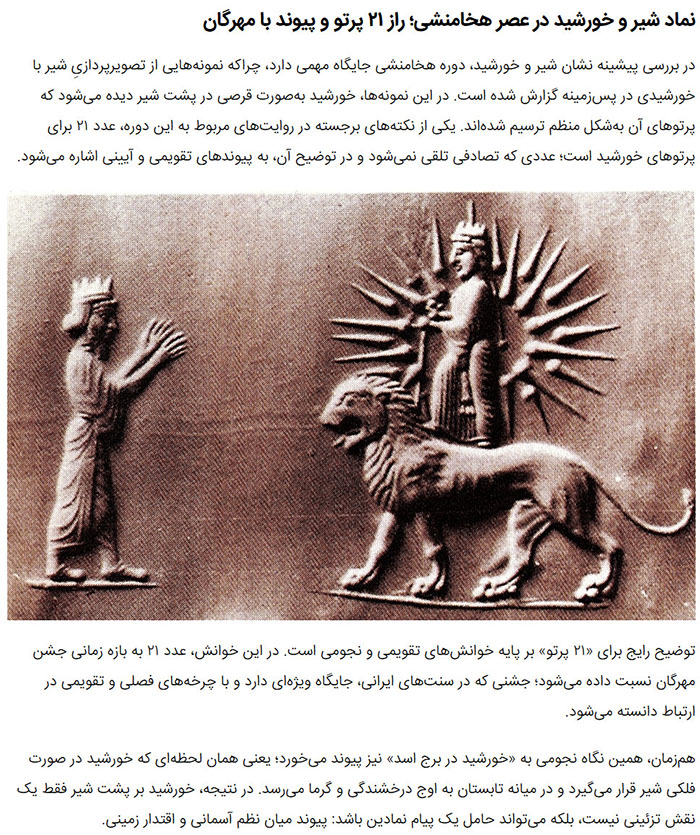
The combination of the lion and sun appears in artifacts dating back to the earliest Iranian civilizations. These depictions often show a lion standing before or beside a solar disk, with rays emanating from the sun, symbolizing divine authority and cosmic harmony.
The “Shahdad Banner” (6,000 years old) contains a lion motif with a solar disk, illustrating the early association of these symbols.
This union of symbols signified dynamic celestial-earthly power, emphasizing the king’s role as the divine representative on earth, entrusted with maintaining cosmic order.
February 10, 2026 | 5:17 pm