Prominent Women Leaders Meet with Supreme Leader: Zhila Sadeghi
Section 3: The Significance of the Meeting with Supreme Leader Khamenei
The Role of the Supreme Leader in Iranian Politics and Society
Ayatollah Ali Khamenei, as the Supreme Leader of Iran since 1989, holds the highest authority in the country’s political, religious, and social spheres. His role encompasses overseeing the executive, legislative, and judicial branches, guiding foreign policy, and shaping societal values through religious and ideological influence.
Historically, the Supreme Leader’s stance on women’s rights has been complex—balancing traditional religious doctrines with societal realities. While conservative in some aspects, Khamenei has occasionally emphasized women’s importance in society, urging their participation in education and workforce development. His speeches often highlight the Islamic principles of justice and social responsibility, which can be interpreted as supportive of women’s societal roles within an Islamic framework.
Why the Meeting is a Historic Milestone for Women’s Leadership in Iran
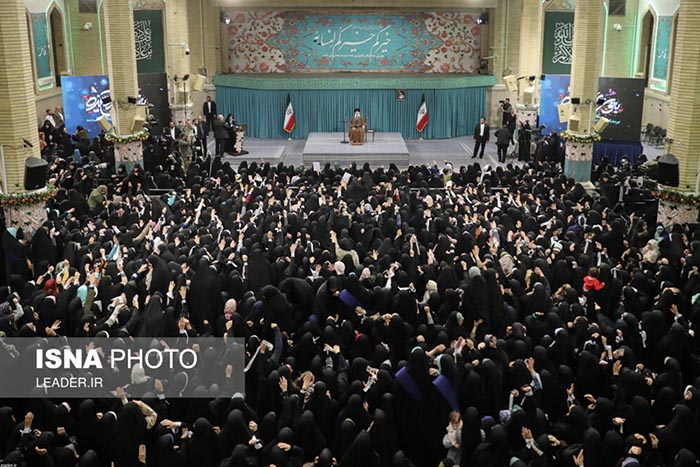
For decades, direct engagement between women leaders and the Supreme Leader has been limited, often confined to formal or symbolic events. The recent gathering at Husseiniyeh Khomeini, where influential women from various sectors met with Khamenei, signifies a pivotal shift.
This event marks one of the rare occasions where women’s voices are directly heard by the highest authority, signaling a potential recognition of their growing influence and the need for inclusion in Iran’s national discourse. It also demonstrates a strategic effort by the leadership to foster social stability by integrating women’s aspirations into the fabric of the Islamic Republic’s ongoing development.
The significance is amplified by the symbolic setting—Husseiniyeh Khomeini—an institution associated with revolutionary ideals, religious authority, and national identity. Meeting there underscores that women’s empowerment is being framed within the context of Islamic values and the revolutionary legacy.
Topics Discussed: Women’s Rights, Education, Society, and the Future
While the precise details of the discussions remain confidential, sources close to the event suggest that key themes included:
- Women’s Role in Society: Emphasizing their participation in education, employment, and leadership positions.
- Legal and Policy Reforms: Addressing discriminatory laws affecting women’s rights in marriage, custody, and employment.
- Cultural and Religious Perspectives: Exploring how Islamic teachings can support gender equality and women’s societal contributions.
- Future Vision: Outlining long-term strategies for integrating women into Iran’s political, economic, and social spheres.
This dialogue signifies an acknowledgment by the leadership of the importance of women’s active engagement, both as citizens and as agents of societal progress. It also opens pathways for future policy reforms and cultural shifts that can elevate women’s status within Iran’s social hierarchy.