Secrets of Qajar Coffee: From Court Manners to Today’s Cafes
The Rise of Qajar Coffee: A Royal Symbol
Cultural and Political Context
During the Qajar era, coffee evolved from a casual social drink into a symbol of court elegance and political intrigue. Qajar coffee became associated with the royal court, where it was prepared and served with elaborate rituals demonstrating status and respect.
Unique Features of Qajar Coffee
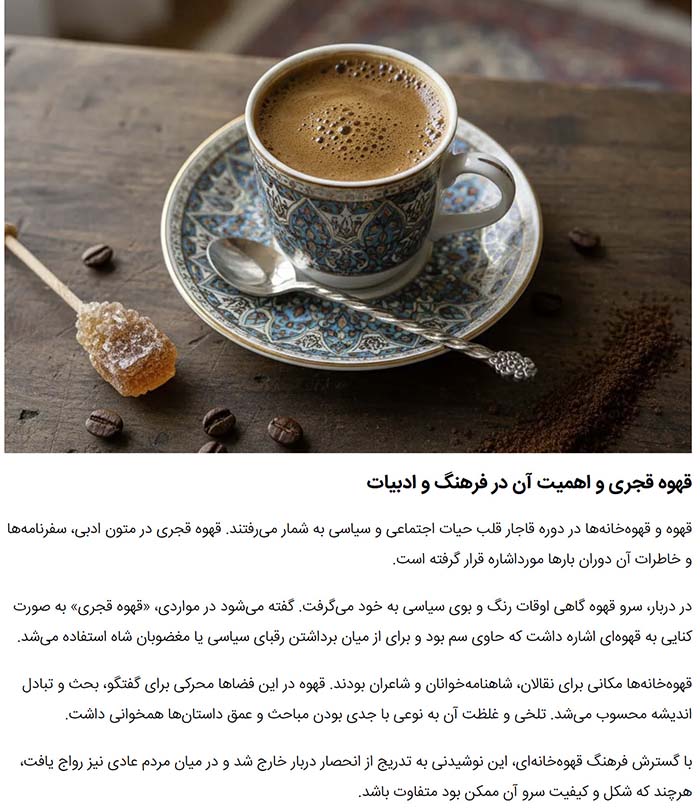
The Qajar version of coffee was characterized by its intense bitterness, aromatic spices, and traditional preparation methods. It was often brewed using copper or brass pots called delle or coffee pots, and served in delicate porcelain or silver cups.
Rituals and Customs in Serving Qajar Coffee
Formal Court Etiquette
Serving Qajar coffee was an art form. The rituals surrounding its presentation reflected social hierarchy and respect. Coffee was served in small, ornate cups—often without handles—and poured from a special silver or porcelain vessel.
Serving Etiquette
- Qahvehchibashi: The special baristas or coffee servers responsible for serving coffee played a key role in court ceremonies.
- No Sugar: A distinctive feature was serving the coffee unsweetened, emphasizing its rich bitterness. Sugar was provided separately, allowing guests to sweeten their coffee if desired.
- Presentation: The serving process involved elaborate gestures, often accompanied by poetry recitations and formal conversations.
Cultural Significance
Serving and drinking Qajar coffee was a symbol of hospitality and social status. It reinforced hierarchy, respect, and the importance of formal manners in court and social gatherings.
Decline and Resurgence
Transition to Tea and Modern Coffee
With the decline of the Qajar dynasty and the rise of the Pahlavi era, tea became Iran’s dominant daily beverage, gradually replacing coffee due to cost, import restrictions, and cultural shifts.
Globalization and Western Influence
In recent decades, Western coffee culture—especially Turkish coffee and espresso—has gained popularity, overshadowing traditional Qajar methods.
Cultural Renaissance
However, in recent years, there has been a revival of interest in Iran’s heritage beverages. Many traditional cafes now serve authentic Qajar coffee, emphasizing nostalgia and cultural pride.