The Sad Faces of Mohammad Khatami and Hassan Khomeini at a Funeral Ceremony
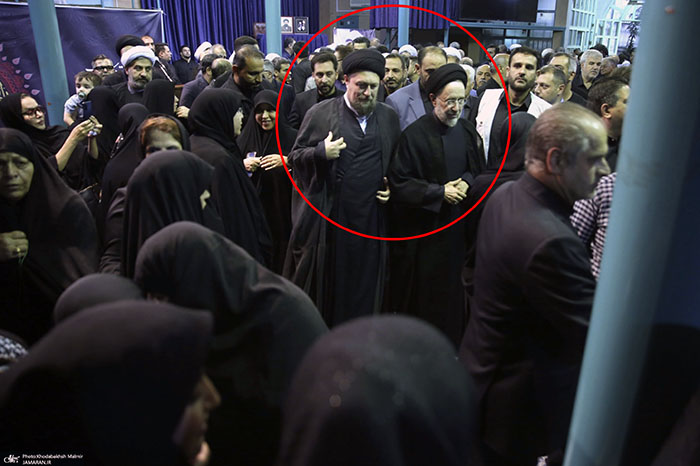
The Legacy of Sad Faces: Reflecting on Historical Significance
The heartbreaking sad faces of Mohammad Khatami and Hassan Khomeini at the funeral ceremony not only reflect personal grief but also evoke a broader historical and cultural significance. Their visible sorrow serves as a testament to the enduring legacies they carry and the pivotal roles they play in shaping Iran’s future.
Historical Context and Family Legacy
Hassan Khomeini, as the grandson of Ayatollah Ruhollah Khomeini, embodies a direct link to the revolutionary origins of the Islamic Republic. His role as the caretaker of his grandfather’s mausoleum signifies his deep connection to Iran’s revolutionary history. The presence of his sad face at the funeral is symbolic, reminding the public of the sacrifices and struggles that have defined the Khomeini family’s legacy.
The Khomeini family has always been at the forefront of Iran’s political and religious spheres. Ayatollah Ruhollah Khomeini’s leadership during the Iranian Revolution of 1979 established the foundation for the Islamic Republic. This legacy is a heavy burden for Hassan Khomeini, who has to navigate the expectations and political realities of contemporary Iran while honoring his family’s past.
More stories
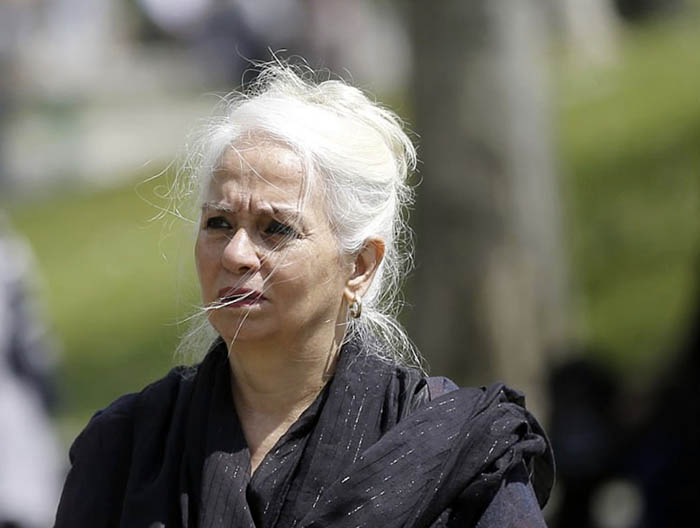
13 Bedar in Tehran: Celebrating Life on the Frontline of War
Introduction In the heart of Tehran, where headlines often speak of geopolitical tension, military escalation, and uncertainty, a different story … Continue reading ➝
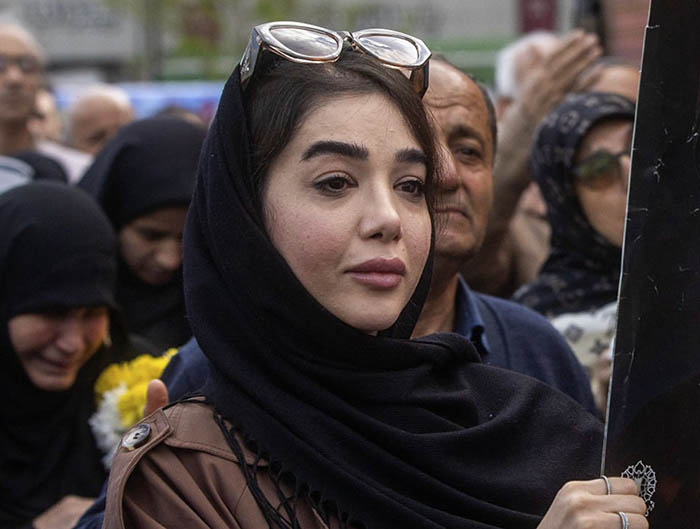
A Mournful Face at Tangsiri’s Funeral: Grief, Power, and Tension in Tehran
Introduction The image of a mournful face at the funeral of Alireza Tangsiri has become one of the most haunting … Continue reading ➝
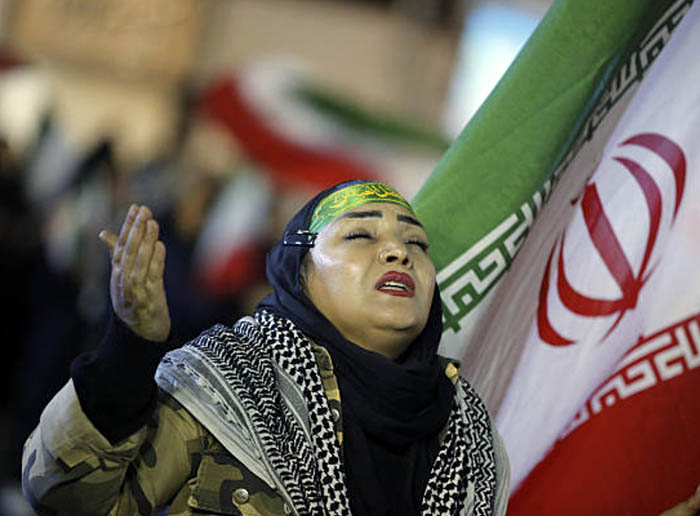
Israeli and U.S. Attacks on Spark Mass Protests in Tehran: Rising Middle East Tensions in 2026
Introduction In a dramatic escalation of tensions in the Middle East, mass protests erupted in Tehran following reports of coordinated … Continue reading ➝
The Sorrow of Destruction in West Tehran: Inside the Human Cost of the War
Introduction The city of Tehran woke to devastation on March 30, 2026. In the western districts of Iran’s capital, residential … Continue reading ➝
US–Israel–Iran War Demonstration in Washington, DC: Iranian Diaspora Rally for Freedom
Introduction On March 29, 2026, thousands gathered on the National Mall in Washington, DC near the iconic US Capitol to … Continue reading ➝