World Leaders Gather for United Nations General Assembly as President Masoud Pezeshkian Delivers Wartime Address
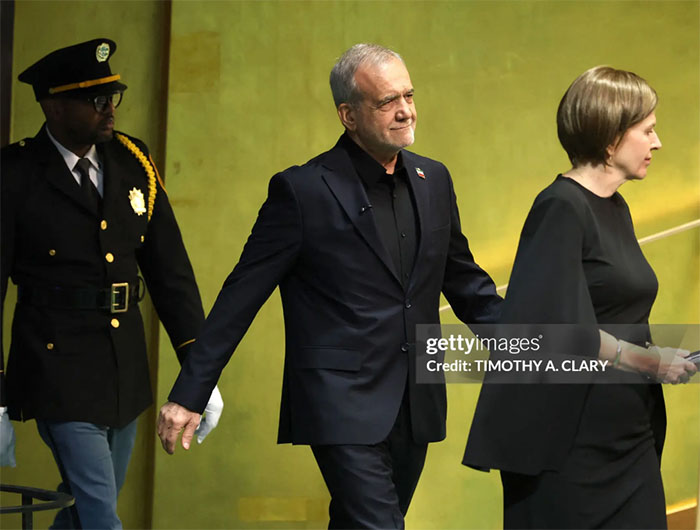
Who Is Masoud Pezeshkian?
Masoud Pezeshkian became president of Iran in 2024 after winning the country’s presidential election.
A physician and former parliamentarian, Pezeshkian entered the presidency at a time when Iran was facing significant domestic, economic and foreign-policy challenges.
His political image has often been associated with a more reform-oriented approach within the Islamic Republic compared with some of his political rivals. However, the Iranian presidency operates within a political system in which the Supreme Leader holds extensive authority over major areas of state policy, particularly defense, security and foreign affairs.
This institutional structure is important when assessing the role of the Iranian president.
Pezeshkian is the head of Iran’s executive branch and represents the country internationally, but he does not personally control every aspect of Iranian foreign and security policy.
Iran’s Supreme Leader and other institutions, including the Islamic Revolutionary Guard Corps and the country’s security establishment, play major roles in strategic decision-making.
Consequently, international coverage of “Pezeshkian’s Iran” needs to distinguish between the president’s public statements and the broader decision-making structure of the Islamic Republic.
Why Pezeshkian’s UN Speech Matters
The Iranian president’s speech attracted attention because it came at a moment when diplomacy between Tehran and Washington was again being discussed.
Reuters reported that Iranian and American representatives communicated through intermediaries on the sidelines of the UN General Assembly. The contacts involved Iranian Foreign Minister Abbas Araghchi and U.S. envoys Steve Witkoff and Jared Kushner.
The talks were significant because direct diplomatic engagement between Washington and Tehran has remained extremely difficult.
The United States and Iran have spent years in conflict over Iran’s nuclear program, sanctions, regional security, military activity and diplomatic recognition.
The current confrontation has added another layer to the relationship.
Pezeshkian’s emphasis on diplomacy therefore came as international governments were looking for possible avenues to reduce the fighting.
At the same time, his declaration that Iran would not surrender showed the gap that remained between the positions of Tehran and Washington.
September 23, 2026 | 3:13 pm